
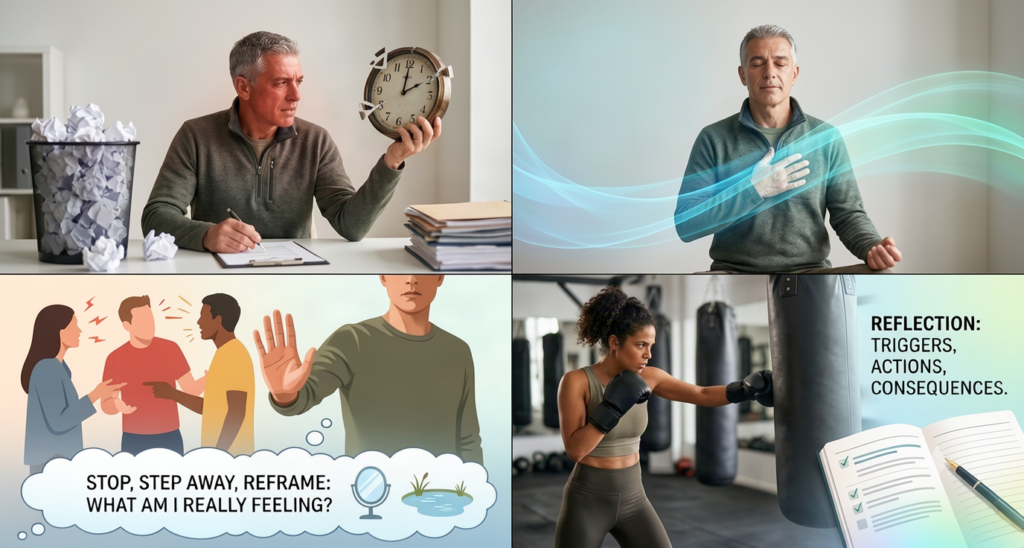
What Is Anger Management?
You may reduce the impact that rage has on you by practicing anger management. You cannot make anger go away since it is a natural response and emotion. However, you can get more adept at handling stress and learn how to calm down when angry. Anger is a strong emotion. Feeling upset, hurt, irritated, or disappointed is a normal and healthy feeling. It can be the outcome of something that happened to you, something you remember, or something someone said or did. Depending on how you respond to it, anger can either benefit or harm you. It can be beneficial if you can respond without causing harm to others.
It can inspire you to make changes and be helpful when we need to defend ourselves. However, it may also cause you to react in ways that are inappropriate. Keeping your rage within can result in passive-aggressive conduct, such as “getting back” at people without explaining why or acting hostilely and critically. You can manage crises, find solutions to issues, and maintain deep connections if you know how to identify and communicate these emotions appropriately.
Cognitive Strategies to Calm Down Anger
Cognitive treatments are therapeutic approaches that assist individuals in altering their thoughts and beliefs in order to improve their emotions and behaviors. The goal of cognitive therapies for anger management is to recognize and change the thought patterns that lead to uncontrollable rage. These include anger management techniques, cognitive restructuring, and cognitive behavioral therapy (CBT).
These techniques enable people to rectify the erroneous or illogical thought patterns that underlie problematic anger-related behaviors by helping them comprehend the relationship between their thoughts, feelings, and behaviors. These therapies improve emotional regulation and interpersonal connections while lowering the frequency and intensity of furious outbursts by addressing the cognitive causes of anger. You may also read techniques to manage stress, anxiety, or depression to keep your life happy and healthy.
1. CBT, or Cognitive Behavioral Therapy
CBT is a brief, goal-oriented treatment that assists individuals in recognizing the underlying ideas and triggers that cause anger. Participants can learn more constructive ways to deal with events that make them angry and how to calm down when angry by identifying these tendencies. To lessen the possibility of impulsive reactions, people should, for instance, learn to stop and consider if their anger is founded on facts or assumptions.
2. Restructuring Cognitively
The goal of cognitive restructuring is to swap out illogical or inflated ideas with more sensible and helpful ones. When someone feels mistreated, for example, they may change their perspective from “They’re doing this on purpose to upset me” to “Maybe they didn’t realize how their actions affected me.” This change can encourage problem-solving and lessen emotional intensity.
3. Plans for Controlling Anger
Plans for controlling anger entail developing a customized approach to deal with rage in the moment. These could involve actions like planning aggressive conversation, employing relaxation techniques, and identifying early indicators of rage. These strategies enable those who struggle with anger management to react intelligently.
4. At-Home Anger Management Strategies

5. Develop Emotional Self-Control
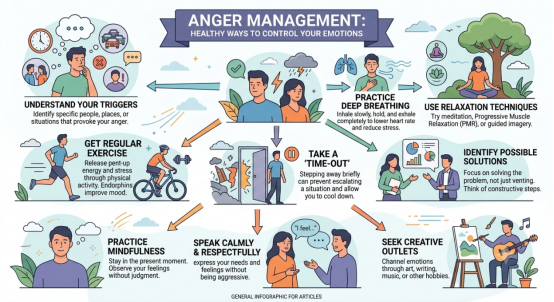
The next crucial stage in managing your anger is to discover strategies that enable you to deal with intense feelings and end the cycle of anger. Anger that is out of control indicates that your feelings are controlling your actions. These techniques are based on the more general concepts of emotion regulation, which can assist individuals in identifying, analyzing, and changing emotional reactions before they become impulsive.
6. Put Yourself at a Distance
You can find instant respite from an upsetting situation by physically removing yourself from it. Psychological distance, however, can be useful if that isn’t feasible. You can react more logically by seeing someone else going through the issue or by reflecting on yourself.
7. Breathe Deeply to Calm Down When Angry
One effective way to promote relaxation and restore rational, less emotional thinking is to breathe deeply and slowly when trying to calm down when angry.
8. Request a Break to Control Anger
Excuse yourself before you say or do something you regret. To regain your calm and think more rationally, take a short break from the intense scenario.
9. Take Part in Physical Exercise
Your body is ablaze with endorphins and stress chemicals that prime you for action when you’re angry. Take a stroll, preferably outside, to reestablish your mental and physical equilibrium. Take part in physical exercise to calm down when angry.
10. Modify Your Expression and Posture
Surprisingly, you may change how you feel and how other people perceive you by making changes to your body language. It can be beneficial to unclench your fists and relax your arms and shoulders.
11. Solving Problems
Sometimes, very real and unavoidable issues in our lives are the source of our rage and irritation. Anger is frequently a good, normal reaction to these challenges, and not all of it is misdirected. Additionally, there is a societal belief that there is a solution to every issue, which makes us more irritated when we discover that this isn’t always the case. Therefore, the ideal approach to take in such a case is to concentrate on how you handle and confront the issue rather than trying to find a solution. Create a plan and monitor your success as you go.
12. Improve Dialogue to Calm Down When Angry
People who are angry often make snap judgments and act on them, some of which may be highly erroneous. If you’re in a heated debate, the first thing you should do is slow down and consider your answers. Instead of saying the first thing that comes to mind, take your time and thoroughly consider what you want to say. Simultaneously, pay close attention to what the other person is saying and take your time responding.
13. Making Humor

There are several ways that “silly humor” can reduce anger. For starters, it can give you a more impartial viewpoint. When you become enraged and call someone a derogatory term or use a creative phrase to describe them, pause and consider what that word would actually look like. Imagine a big bag full of dirt (or an amoeba) sitting at your teammate’s desk, talking on the phone, or attending meetings if you consider a coworker a “dirtbag” or a “single-cell life form” at work. Every time you think of a name for someone else, do this.
14. Take a Moment To Consider Your Response
We frequently become angry when we feel attacked or provoked, and it’s simple to say hurtful things while we’re upset. Pausing before reacting is a very efficient way to control your anger. Take a deep breath and give yourself a moment to gather your thoughts when you start to feel angry. You can avoid saying hurtful words that you might later regret by taking a moment to reflect before speaking.
15. When Necessary, Take a Break
It’s simple to feel overpowered by the intensity of your feelings when you’re angry. Giving yourself permission to move away is crucial under these circumstances. Before reacting, you can cool down and gather your thoughts by taking a break from the situation. Removing yourself from the source of your anger, whether for a short while or a longer period of time, can help you refrain from acting or speaking impulsively.
16. Contest Negative Ideas and Thoughts
Negative mental patterns or ideas about a circumstance or person frequently give birth to anger. For instance, you can think that someone is purposefully hurting you, or you might have irrational expectations about how other people should respond. These concepts can intensify rage and make controlling emotions more challenging. Try to confront these pessimistic ideas in order to manage your rage. Consider whether the circumstances are really as dire as they appear or whether you might be overlooking something.
17. Develop Self-Compassion to Calm Down When Angry
You are not inherently a bad person just because you are furious. Recognize your difficulties without justifying negative actions. You may be accountable for your behavior and still give yourself the time you need to develop a better reaction.
18. Establish Boundaries for Yourself
Ignoring your demands on a regular basis might cause resentment and angry outbursts. Express your boundaries politely and early on. You can stop annoyance from becoming out of control by saying no, asking for space, or asking for a change.
19. Once You’re at Ease, Voice Your Worries
As soon as you’re able to think properly, be firm without being confrontational while expressing your anger. Without causing harm to others or attempting to exert control over them, express your demands and concerns in a straightforward manner.
20. Work Out For a Short While
You get a surge of energy when you’re angry. Exercise and physical activity are among the best ways to manage anger. Exercise helps relieve excess stress, depression, and anxiety. whether you go for a quick stroll or visit the gym.
21. Pay Attention to the Details
Your rage is fueled by angry thoughts. “I can’t stand it” is what comes to mind. “This traffic jam is going to ruin everything” will make you more irritated. Rethink your thoughts if you find yourself thinking about things that make you angry.
Say something like, “There are millions of cars on the road every day,” to reflect on the facts. There will occasionally be traffic bottlenecks. You may maintain your composure by concentrating on the facts without adding disastrous forecasts or skewed exaggerations.
22. Take Up a New Activity to Distract Yourself
Anger is fueled by dwelling on a distressing circumstance. For instance, if you’ve had a difficult day at work, you will remain frustrated if you spend the entire evening going over everything that went wrong.It’s not always effective to tell yourself, “Don’t think about that.” Distracting yourself with an activity is the best approach to mentally change gears. Engage in an activity that demands your attention and makes it harder for negative or angry ideas to enter your mind.
Conclusion
Learning to control your anger involves expressing your feelings in positive, healthy ways rather than repressing them. You can react to challenging events with more composure and confidence if you practice the anger management skills covered in this guide along with cognitive tools that assist challenge negative thought patterns and develop emotional awareness. Keep in mind that transformation takes time and that obstacles are a typical part of the process.
You may create better relationships, lessen stress, and enhance your general well being with regular practice, perseverance, and introspection. Seeking help from a mental health expert can offer tailored advice and practical coping mechanisms if your anger still feels overpowering or starts to interfere with your day-to-day activities. Your life will become healthier, more balanced, and more meaningful with each step you take to manage your emotions.
Frequently Asked Questions
1. Why am I so prone to anger?
Stress, frustration, emotional triggers, sleep deprivation, and unresolved emotions can all lead to anger.
2. How do I manage my rage?
It can be beneficial to identify triggers, take breaks, practice relaxation techniques, and take deep breaths.
3. Is rage a typical feeling?
Anger is a normal feeling, but it’s crucial to control how you exhibit it.
4. Does rage have an impact on mental health?
Indeed, excessive rage can lead to stress and have a detrimental effect on relationships and general well being.
5. When should I get treatment for my anger management problems?
If your anger feels out of control, hurts you, or gets in the way of your everyday life, get treatment.