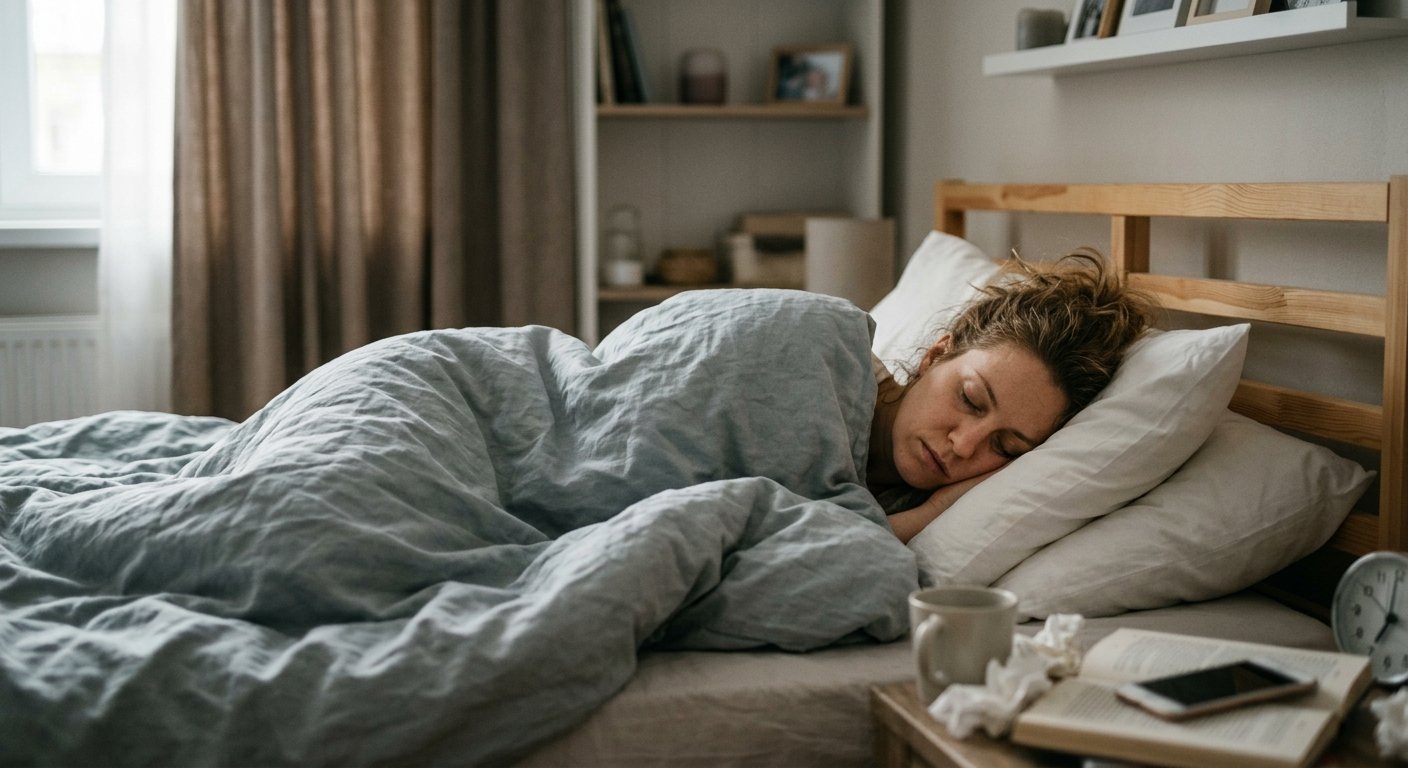

The majority of individuals relate depression with being unable to fall asleep and lying awake at night, looking at the ceiling. That presentation is authentic, yet it’s only half the story. The converse is true for a large percentage of individuals with depression, especially younger adults and women, those with atypical depression, and those going through their first depressive episode: they sleep far too much, and it never feels like enough. This is one of the common experiences associated with depression and sleeping too much.
This is known as hypersomnia, and it is a recognized symptom of severe depressive disorder. It’s also one of the more misinterpreted and stigmatized presentations since, from the outside, spending the day in bed appears to be lazy, and even the person doing it may feel that way. The first step in ending the cycle is to understand why it occurs, why it exacerbates depression, and what truly helps.
Four Mechanisms of Depression and Sleeping Too Much
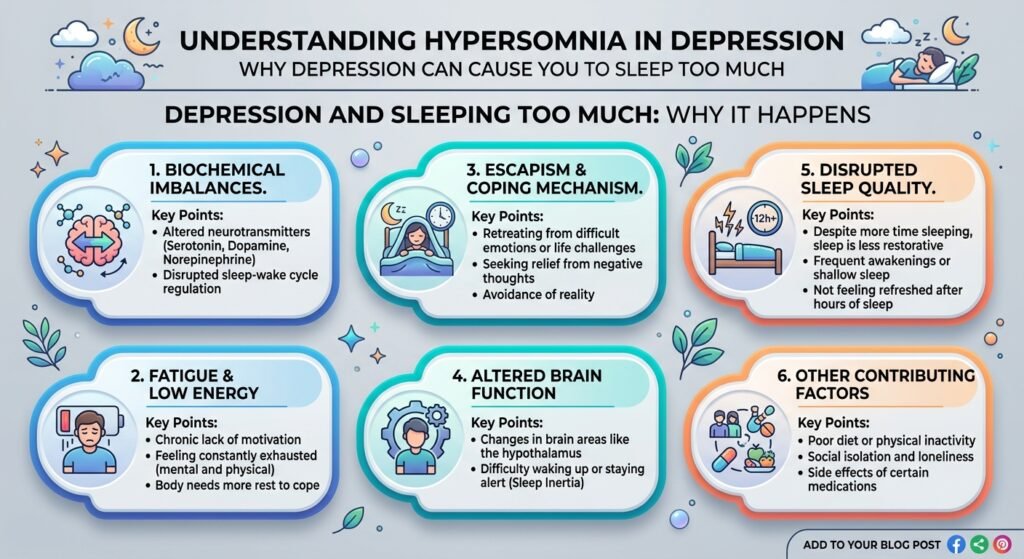
1. The Impact of Depression on Your Sleep Pattern
Depression can interfere with the body’s natural sleep cycle, making it more difficult to wake up when necessary or fall asleep at the appropriate time. Some folks can have trouble getting out of bed in the morning due to late-night drowsiness. They could still feel exhausted and low on energy even after getting several hours of sleep.
This could also help to explain why some depressed persons have worsening moods in the morning. It can be particularly challenging to get out of bed and begin the day, and as the day progresses, their mood may get better. See our post on self-help tips for depression for more information.
2. Modifications to Brain Chemicals That Impact Energy
The brain chemicals that keep us alert, engaged, and energetic can be impacted by depression. A person may experience fatigue, drowsiness, or difficulty finding the energy to go through the day when these substances are not functioning as they should.
This is one explanation for why some depressed people sleep longer than usual but still wake up feeling exhausted. Depending on the patient’s symptoms and requirements, some medications may assist in increasing energy and lessening excessive sleepiness. The best course of action, however, differs for each individual.
3. Avoidance Behavior
This mechanism is clinically significant and different from the neurological ones. Sleep turns into a means of escaping emotional suffering. Unconsciousness provides momentary solace when waking life is perceived as burdensome, draining, or pointless. Staying asleep is the easiest option because the sad brain doesn’t expect anything good to happen throughout the day.
Avoiding waking life can eventually become a deeply ingrained behavioral pattern that fosters the withdrawal and passivity that prolong depressive symptoms. You can also read the Stress Management post for techniques to manage stress.
4. Cytokines that promote inflammation
Elevated levels of pro-inflammatory cytokines are linked to depression, and as part of the body’s natural illness response, cytokines cause exhaustion and an increase in sleep drive. Depression-related weariness is partially an inflammatory signal, meaning the body is acting as though it is battling an infection. Depression and sleeping too much may be related to these changes in the body. The neuroinflammatory theory of depression is closely related to this “sickness behavior” reaction.
How Excessive Sleep Can Impact Your Mood and Healing

Without a question, sleep is one of the most essential necessities for all living things; in fact, it can be assumed that a single sleepless night will lead to both psychological and physical issues. However, getting too much sleep can also lead to health problems, especially if it happens frequently.
The disturbance of the circadian rhythm, the body’s “internal clock,” which controls numerous vital physiological processes, such as hormone production, metabolism, and sleeping and waking, is one of the negative consequences of getting too much sleep.
Depression and sleeping too much may be explained by disrupting the body’s “internal clock” such that it is no longer able to coordinate with the natural day/night cycle. It causes drowsy days and difficult mornings.
Even worse, sleeping too much might restrict daylight exposure, which can lower serotonin production, the “happiness hormone,” and have a detrimental effect on mood. These hormonal alterations eventually start to influence day-to-day conduct and lifestyle decisions.
Over-sleepers frequently experience social isolation, decreased physical activity, and poor or irregular diets, all of which exacerbate their physical and mental problems.
According to a 2024 review published in Sleep Medicine, approximately 25% of those with major depressive disorder have excessive drowsiness and associated symptoms. The review also emphasizes how different people define excessive tiredness.
What Takes Place in the Brain When Hypersomnia Is Caused by Depression?
This is the point at which depression and excessive sleeping begin to make more physiologic sense. The hypothalamus, the area of the brain in charge of controlling energy, hunger, and sleep cycles, is impacted by depression.
How does the brain actually process this?
Neurotransmitter imbalance: Lower levels of norepinephrine and serotonin slow down the processes that keep you awake.
Disturbed REM sleep patterns: Individuals with depression tend to go into REM sleep earlier and stay in it longer, which can make you feel restless even after getting a lot of sleep.
Cortisol dysregulation: Your normal cortisol rhythm, which is meant to increase in the morning to wake you up, might be flattened by depression.
To put it briefly, your brain isn’t intentionally sleeping “too much.” It is having trouble controlling the mechanisms that are meant to transition you from alert mode to rest mode.
Easy Steps to Cut Down on Oversleeping
Changing your daily schedule gradually would probably be a beneficial alternative for you if you struggle with depression and oversleeping. This is a suggestion to engage in some self-experimentation rather than a rigid rule or predetermined guideline. A few of these little adjustments will be helpful:
- Your bedroom should only be used for seclusion and sleep. Not for working, watching TV, or scrolling.
- Go outside as soon as you wake up, let the morning sunlight into your house, or at the very least, stand by the window. This will aid in your awakening.
- Establish a nightly routine before going to bed to assist your brain in gradually “learning” that it’s time to get ready for sleep.
- Prior to attempting to sleep less, try to wake up at the same time.
- Your biological clock will ultimately become more synchronized as a result of this.
- Reduce the length of your sleep gradually. It can be reduced by 15 to 30 minutes every night, giving your body enough time to adjust.
- The key is to be kind with oneself. If you don’t meet your goal today, it’s not a failure; rather, it’s a learning opportunity for tomorrow.
When to Get Expert Assistance
If excessive sleep has persisted for more than two weeks, is interfering with relationships, work, or school, or is accompanied by other depression symptoms, including persistent sorrow, loss of interest, changes in eating, or difficulties concentrating, consult a physician or mental health expert. Depression and sleeping too much may be connected when these symptoms occur together.
If oversleeping is accompanied by thoughts of suicide or self-harm, a persistent sense of hopelessness, or a total disengagement from everyday obligations and relationships, get treatment right away via a crisis line, emergency department, or trusted provider.
47.5% of the 3,573 participants in a population-based US study who had gone through a major depressive episode reported having symptoms of hypersomnia, or sleeping too much.
If home remedies haven’t helped after a few weeks, a proper sleep evaluation from a sleep specialist or psychiatrist can assist in differentiating depression-related hypersomnia from other medical causes.
Conclusion
One way depression impacts day-to-day functioning is excessive sleep. Even after a full night’s sleep, it might be challenging to get out of bed due to changes in sleep habits, low energy, stress, and a lack of enthusiasm. However, as other variables might also affect sleep, oversleeping does not automatically indicate depression.
Consider consulting a healthcare provider if you frequently sleep for extended periods of time yet still feel exhausted, or if your sleep patterns are interfering with your everyday activities. You may get better sleep and feel more energized throughout the day with the correct support, good sleep habits, and the right treatment when necessary. Recall that you are not alone in handling these emotions.