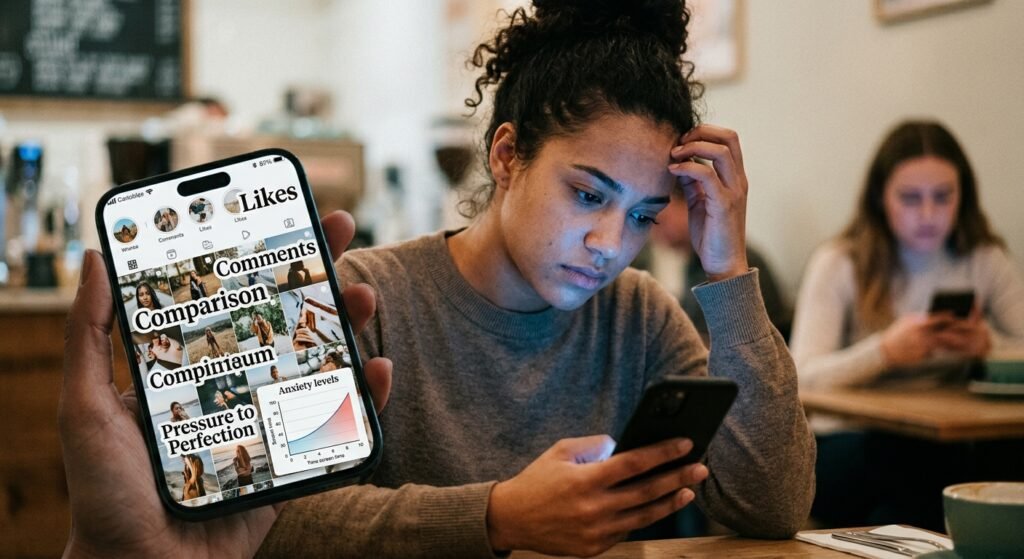
Social media has practically become a part of everyday life in our digital age. Women spend a lot of time online, from Facebook mom groups and Twitter arguments to Instagram reels and TikTok dances. It is now a mirror reflecting societal expectations, beauty standards, and lifestyles rather than merely a means of communication. How Social Media Affects Women’s Mental Health is an important topic because social media has many advantages, including fostering communities, elevating the voices of women, and sharing tales, but it also has unspoken risks.
Many women are caught in vicious cycles of anxiety, self-doubt, and comparison. Self-esteem and mental health are directly impacted by the continuous exposure to “perfect lives” and filtered photos. This article examines conflicting aspects of social media and how it affects women’s emotional and hormonal health, providing helpful strategies for resiliently navigating the digital age.
When Mental Health Is Affected by Social Media
When social media causes anxiety, stress, and depression, interferes with day-to-day activities, or keeps women mired in comparison, fear, humiliation, or emotional overload, it can be detrimental to mental health. This may occur gradually, particularly if scrolling becomes a coping mechanism for stress, loneliness, trauma, or unpleasant feelings.
Women may see how social media impacts them in the following ways:
- Increased anxiousness following a scroll
- Reduced confidence or self-worth
- Increased body dissatisfaction or body checking
- Having trouble falling asleep
- Feeling excluded, behind, or inadequate
- Comparing their recuperation to that of others
- Feeling emotionally spent due to conflict or upsetting news
- After scrolling, turning to drugs, food, shopping, or seclusion as a coping mechanism
- These tendencies do not indicate that a woman is “too sensitive” or weak.
- They frequently indicate that her body and mind require further attention, relaxation, support, and connection.
In what ways does social media affect women’s mental health differently than it does men’s?
There is a real and significant divide. Compared to males, women regularly report greater rates of poor mental health outcomes associated with social media use, including anxiety, body dissatisfaction, social comparison, and despair. Although women use social media more than males, this isn’t the only reason. The disparity extends beyond the amount of time spent on the internet.
How Social Media Affects Women’s Mental Health can be seen in how women are more likely to join in communities where physical appearance is important, follow influencers and celebrities, and interact with appearance-focused content. Additionally, they have qualitatively different online experiences: the cultural emphasis on women’s attractiveness doesn’t go away when they log onto Instagram; rather, it intensifies; gender-specific harassment is pervasive; and the pressure to maintain a controlled digital identity is more acute. Globally, people spend an average of 2 hours and 21 minutes each day on social media platforms. In the United States, social media usage is also widespread, with approximately 310 million people using social media platforms.
Social Media, Self-Worth, and Body Image
Social media has a significant impact on how women see and value their bodies. A never-ending stream of comparisons can be produced by altered images, filters, fitness material, weight-loss trends, and “what I eat in a day” videos. Even when you are aware that photos on the internet are edited or filtered, your body could nevertheless take in the message that “I’m not enough.” I must transform. I’m lagging behind.
Women who have experienced eating disorders, body shame, sexual trauma, pregnancy or postpartum changes, chronic disease, aging-related changes, or relationship scars may find this pressure particularly distressing. Social media frequently promotes appearance-based content, which can give women the impression that their value, visibility, and desirability depend on how they look.
It requires more than just logging off to address body image issues. Rebuilding trust with their body, overcoming shame, and learning to view themselves with compassion rather than condemnation are all areas in which many women require assistance.
Does Instagram Make Women Feel Anxiety and Depression?
How Social Media Affects Women’s Mental Health is relevant in this context; causation is legitimately disputed, and “cause” is a harsh word. However, certain experimental investigations, in which participants were randomly assigned to use or avoid platforms, do suggest a directional effect, and the correlational evidence is high enough to be taken seriously.
The prevalence of sadness and anxiety symptoms was considerably greater among young adults who reported utilizing various social media platforms. In particular, individuals who used seven to eleven platforms were more than three times more likely to experience anxiety and sadness than those who used zero to two. Teens who spend over three hours daily on social media are 2.7 times more likely to experience ongoing feelings of sadness or hopelessness.
This is hardly a nuanced discovery. It persisted even after adjusting for the total amount of time spent online, indicating that fragmentation between platforms was more important than hours logged. How Social Media Affects Women’s Mental Health makes natural sense that there is a multiplication effect. Every platform has its own notification pull, comparison dynamics, and social environment. By focusing attention on several at once, one is never completely out of the stream.
The Delusion of Excellence
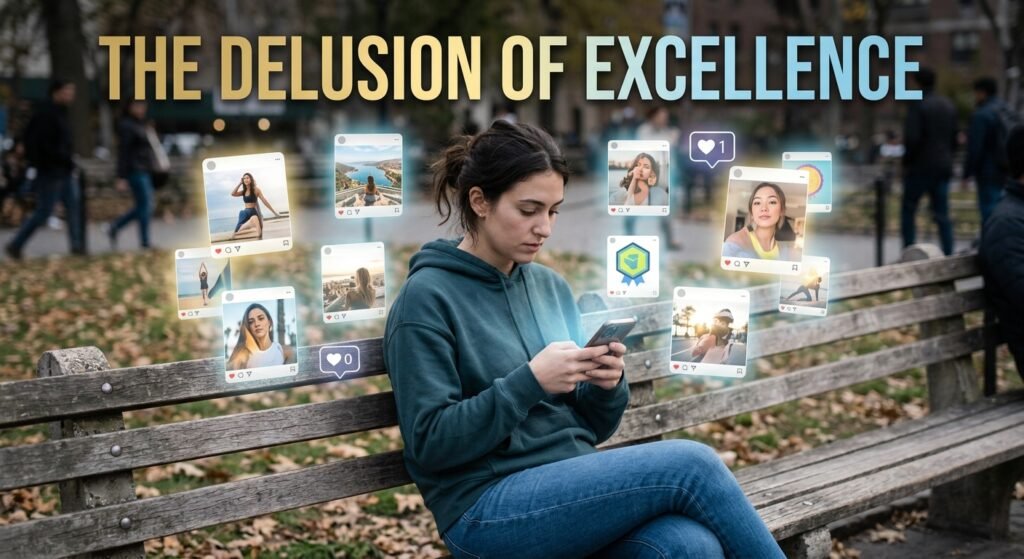
It’s simple to feel inadequate when your feed is overflowing with influencers who appear to have just stepped out of a spa commercial. For many women, social media serves as a constant reminder that they fall short. Women who may not have previously struggled with body image concerns may find themselves engulfed in a tempest of self-doubt. “What if I worked out more?” they ask themselves. What if I consumed cleaner food? What if I simply applied more makeup?
This is due to the fact that expectations are frequently irrational. A nearly unachievable version of reality is produced by the filters, lighting, and angles. Additionally, it has an impact on more than simply your mood when that image becomes your frequent companion. It erodes your sense of value. The reality? You don’t have to look flawless to be confident, and you don’t have to have a six-pack to be lovable.
It’s All About Verification
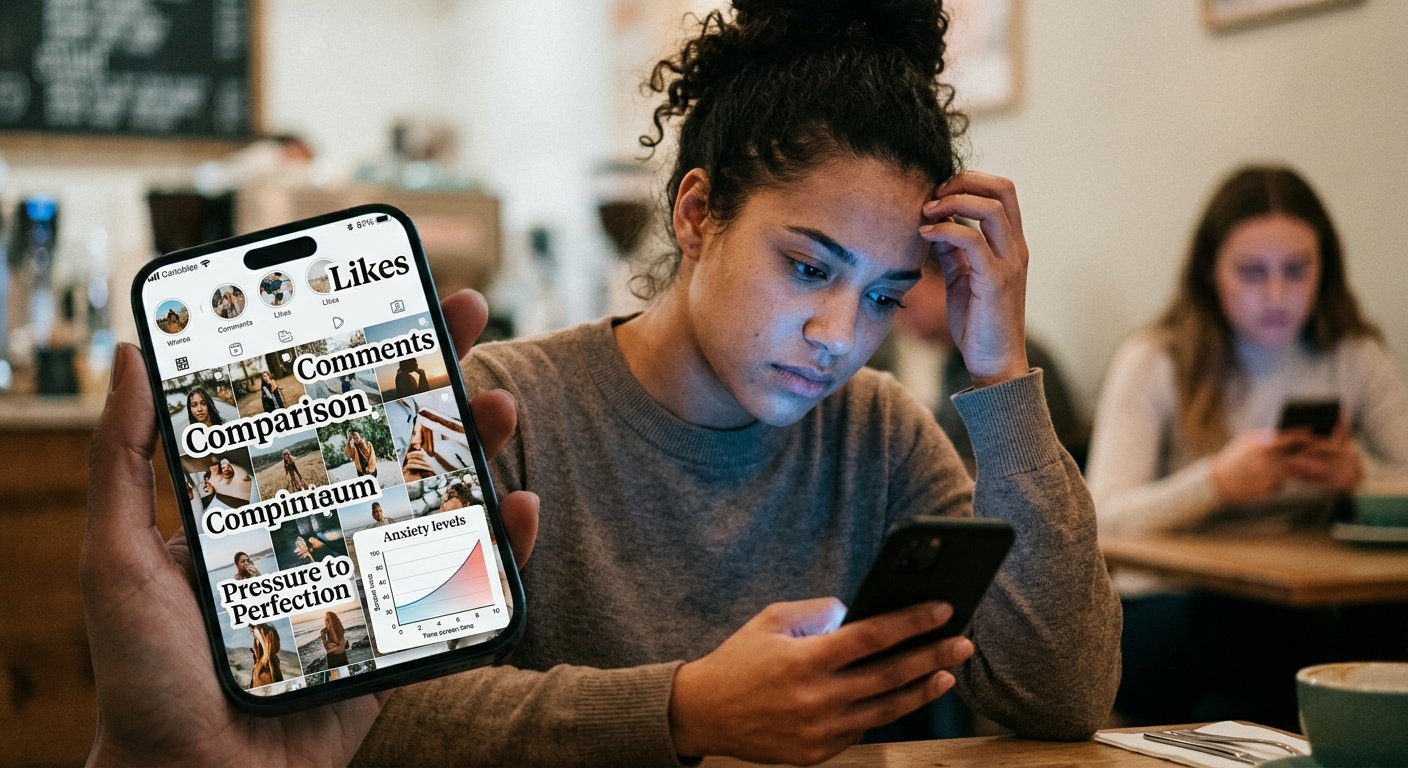
Let’s discuss shares, likes, and comments. Social media praise may be like a narcotic for a lot of women. It feels good to get a dopamine rush from a notice, doesn’t it? However, the issue is that we have developed an addiction to it. Some people base their sense of value on the number of likes on a post. It feels like their entire day has been wrecked if it doesn’t receive enough likes.
The cycle is vicious. She waits for approval the more she posts. However, she doesn’t always receive the adoration she wants from social media. There are moments when there are no heart emojis or comments in the inbox. That quiet might be overwhelming.
Nevertheless, it is unhealthy to always seek acceptance. It causes frustration, despair, and anxiety. When the likes don’t come in, women begin to doubt their own worth. In actuality, a screen shouldn’t be the source of validation. It needs to originate from within.
Online harassment and cyberbullying
How Social Media Affects Women’s Mental Health is also evident in contrast, as a lot of women encounter overt animosity on the internet. Women are disproportionately targeted by harassment, body shaming, and cyberbullying. Influencers, journalists, and female politicians frequently face derogatory remarks that target not just their beliefs but also their appearance and private life.
Posting online can lead to criticism for regular women as well, whether they are making career or parental decisions. Fear, loneliness, and, in extreme situations, trauma are brought on by this harassment. Many women completely stop using the internet, which limits their chances and silences their voices.
How to Make Healthier Use of Social Media
- Give your social media apps a time limit. You might be encouraged to stop aimlessly scrolling if you receive notifications when your screen time limit has been met. Although you can extend your daily allotment, setting screen time limitations might give you a sense of control over how much time you spend using apps.
- Prioritize active participation above passive engagement. While passive browsing is typically linked to negative impacts, including low self-esteem and depressed mood, triggering anger issues, active participation, such as posting or commenting, is frequently linked to positive results for users.
- Keep in mind that most people only talk about their accomplishments. The majority of people meticulously arrange their accounts to highlight the positive aspects of their lives. However, few people actually lead the idealized lives that are depicted online.
An Appeal for Action
The internet world is shaped by each scroll, like, and share. Through deliberate use of social media, women may recover power. Women can transform platforms into places for activism, education, and support rather than allowing them to determine their own value.
As a community, we must also monitor our own conduct by refraining from critical remarks, elevating the voices of those who are vulnerable, and questioning unreasonable expectations. Online small deeds of kindness can have a good knock-on effect on mental health.
Conclusion
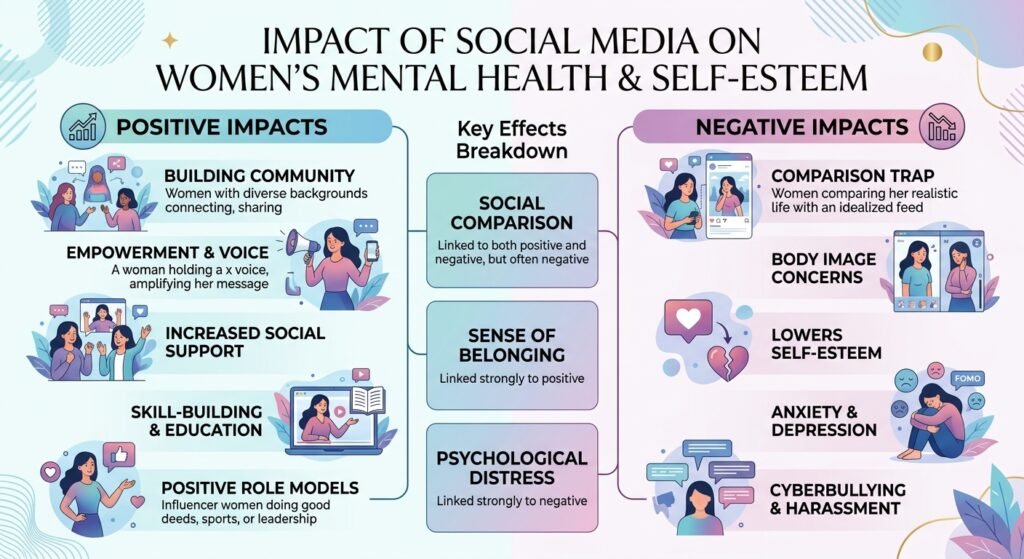
Social media is a tool; it is neither totally beneficial nor totally negative. It can either empower women or cause uneasiness in them. How we use technology and how much control we give it over our life is what makes a difference.
In actuality, there is a genuine lady with challenges and fears hidden behind every edited picture. Keeping this in mind aids in ending the shame and comparing loop. Women can succeed both online and offline by establishing appropriate boundaries, forming genuine friendships, and placing a high priority on mental health. A woman’s value should never be determined by social media. Her tenacity, resiliency, and distinctive story are what make her valuable, not likes or followers.
Frequently Asked Questions
1. What impact does social media have on the mental health of women?
Stress, worry, loneliness, and negative thoughts can all be exacerbated by social media, particularly when women are continuously comparing themselves to others.
2. Can women’s self-esteem be diminished by social media?
Indeed. Women may get uncomfortable about their appearance, accomplishments, or way of life when they witness photoshopped images, beauty standards, and seemingly ideal lifestyles.
3. Do women who use social media experience anxiety?
Through comparison, FOMO (fear of missing out), critical remarks, and the need to stay in touch, excessive social media use can exacerbate anxiety.
4. How can women use social media to safeguard their mental health?
Limit how much time you spend on screens, unfollow negative accounts, follow uplifting content, and take regular breaks from social media.
5. Does social media always have a negative impact on women’s mental health?
No. Additionally, social media can offer communities, support, useful information, and chances to interact with others. How it is used typically determines its impact.