

Chronic stress is a protracted, often overwhelming feeling of tension that can significantly impair a person’s daily life. Prolonged stress can lead to mood swings, insomnia, depression, anger, and social anxiety. Understanding chronic stress can help people recognize when normal stress begins to become persistent and starts affecting daily life.
These emotions can become chronic or persistent. Stress is the body’s natural defense mechanism against danger and predators. Hormones that prime the body to avoid or face danger are released. People typically refer to this as the fight-or-flight mechanism.
Humans react in part physically to challenges or threats. The body activates resources that enable people to either stay and face the challenge or quickly reach safety. The hormones cortisol, adrenaline, and norepinephrine are produced in greater amounts by the body. These cause the following bodily responses:
- Elevated blood pressure
- Increased muscle readiness
- perspiration
- Alertness
All of these elements enhance a person’s capacity to react to a potentially dangerous or difficult circumstance. A higher heart rate is also brought on by norepinephrine and adrenaline.
Stressors are environmental elements that cause this response. Noises, hostile conduct, a fast car, terrifying scenes in films, or even going on a first date are some examples. Stress levels often rise in proportion to the number of stressors.
The average stress level in the US was on a scale of 1 to 10, according to the American Psychological Association’s (APA) annual stress survey from 2024. According to the report, the economy and politics were the most frequent sources of stress.
Symptoms
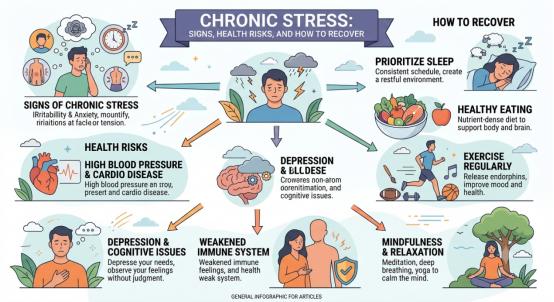
The body and mind are both impacted by long-term stress. It causes psychological and physical symptoms that can make it difficult for a person to go about their everyday life normally. The intensity of these symptoms can differ from person to person. The following are some of the most typical indicators of long-term stress:
- ·Aches and pains
- Reduced vitality
- Having trouble falling asleep
- Ineffective thinking
- Exhaustion
- Feeling a loss of control
- Feelings of helplessness
- Frequent infections and illnesses
- Complaints related to the digestive system
- Headaches
- Irritability and tension in the muscles
- Anxiety
- nervousness
- Having trouble focusing
- An upset stomach
Understanding Chronic Stress: Why Does It Occur?
Chronic stress can have many diverse causes, but it usually fits into one of four categories:
Emotional Stress: challenging feelings like grief, rage, or frustration
Stress in the Environment: where you live and work
Stress in Relationships: By understanding chronic stress, you may know how you interact with friends, family, coworkers, and partners. Workplace stress: obstacles and demands associated with your position. These kinds of tensions frequently have an impact on several areas of a person’s life. Relationship stress might result from work-related stress. Stress in relationships can make it harder to control challenging emotions.
How Your Health Is Affected
If left untreated, chronic stress can negatively affect your health and well-being due to its extended duration. So understanding of chronic stress is very important. The following are some possible side effects of long-term stress:
- Depression and acne
- Diabetes
- Eczema
- Heart disease
- Elevated blood pressure
- Excessive thyroid function
- The syndrome of irritable bowel
- Low sex drive
- Ulcers
- Changes in weight
An estimated 60–80% of primary care visits are thought to include a stress-related component. 2 To protect yourself from the detrimental effects of long-term stress, it is crucial to acquire stress management skills and adopt healthy lifestyle modifications. For general well-being, it’s critical to find strategies for managing chronic stress. Professional therapy may be necessary for this, but self-help and relaxation techniques are frequently beneficial.
How to Manage and Lessen Prolonged Stress

Psychotherapy
Approaches such as cognitive behavioral therapy (CBT) can help you recognize negative thought patterns that contribute to chronic stress. You can then start to replace these ideas with more practical, beneficial ones while working with a therapist. Additionally, you can acquire coping mechanisms that can help you better control how you react to stress. Another strategy that can assist individuals in using mindfulness and meditation to manage chronic stress is mindfulness-based stress reduction (MBSR).
Medication
To help you manage some of the symptoms of stress, your doctor may recommend a variety of drugs. Your doctor might recommend an antidepressant if you are also exhibiting signs of depression or anxiety.
Identifying and Reducing Stressors
You may have immediate control over other causes and stressors, even though you can’t always make significant changes to reduce stress right away.
Making a list of your present worries or recognized stressors could be a good place to start. You might want to mark the ones you can take action against once you’ve identified them.
For instance, you might consider making a budget if your money is the source of your stress. Try meal prep if you’re having trouble finding time to eat.
Your needs and way of life will determine how you lessen stressors, but additional potential stress-reduction techniques include:
- If you’re upset with what you’re seeing on social media or in the news, take a break.
- Reduce bright lighting and loud noises in your workspace to create a calming atmosphere.
- Examining your meetings and turning down certain requests or invitations that aren’t urgent
- Examining emails and notifications at predetermined periods throughout the day
Asking for assistance or assigning tasks to other family members
drugs that can ease stomach discomfort or promote sleep.
Understand Chronic Stress and Reframe Your Ideas
The detrimental emotional impacts of long-term stress may be lessened by adopting an optimistic outlook.
A 2024 review found that in stressful settings, good affect protects against symptoms of trauma, anxiety, and depression.
Experiencing and expressing happy feelings while engaging with your surroundings is known as positive affect. These feelings could consist of:
- Enjoy
- Pride
- Interest
- Enthusiasm
Your thinking is influenced by your affect, and your feelings may be influenced by your thoughts. Your stress reaction is directly influenced by your thoughts and emotions.
Professional assistance could be beneficial if your ideas prevent you from interacting constructively with your surroundings.
With the help of a mental health professional, you can transform negative thought patterns into constructive ones. One method for doing this is cognitive behavioral therapy (CBT).
You might be able to shift your attention to positive feelings and thoughts by engaging in a regular practice of thankfulness.
Chronic Stress Avoidance Techniques

Ongoing stress management and recuperation are comparable to chronic stress prevention. Early stress management may reduce long-term detrimental consequences on the body and mind.
Among the management strategies to avoid long-term stress are:
- Learning new time-management techniques, such as breaking up projects into smaller objectives Delegating responsibilities effectively
- Improving your communication abilities to establish solid relationships with others
- Creating a peaceful and comfortable atmosphere at home and at work
- Establishing and upholding boundaries
- Finding a work-life balance that permits you to take personal time away from your work responsibilities
- Seeking expert advice regarding financial challenges
collaborating with a mental health expert to learn new coping mechanisms.
How Persistent Stress Reshapes the Brain
Chronic stress profoundly affects brain structure and function. “When stress alters brain regions like the hippocampus and amygdala, it’s not just a laboratory finding,” explains. Problems with memory, anxiety, or emotion regulation might impact a person’s ability to maintain healthy relationships and function well at work.”
According to ASU researchers, three brain regions carry the most burden:
Hippocampus: Memory formation decreases, and the size can diminish.
Amygdala: May become overactive, increasing anxiety and emotional reactivity.
Prefrontal cortex: Decision-making and attention deterioration.
Chronic stress can physically alter brain regions involved in memory, emotions, and decision-making, contributing to problems like anxiety and depression.
The hippocampus is especially vulnerable, as evidenced by size reductions that are directly linked to memory problems. In the meantime, anxiety and emotional dysregulation may be exacerbated by an enlarged and overactive amygdala. The makeup of the grey and white matter in the brain is also altered by these changes, which have an impact on the effectiveness of communication between various brain regions. Chronic stress affects millions of people and varies across different groups. Around 30% of adults aged 18–25 experience it, while women report 25% higher rates than men, often due to caregiving responsibilities.
Stress Management’s Advantages
Self-help techniques are frequently effective in managing chronic stress. It’s critical to start applying stress-reduction strategies as soon as you identify persistent stress in your life. There are several reasons why this works.
Quick Stress Relief
By reversing the stress response, fast-acting treatments allow your body to heal and your mind to take a proactive approach to problems instead of reacting in a stressed or even terrified manner. You are more likely to make decisions that are in your best interests and prevent you from adding to your stress when you are in a more at ease and self-assured state.
Develops Stress Resilience
Stress resilience can be developed by long-term good habits. These routines provide you with a regular respite from stressful emotions and enable you to employ techniques that enhance your capacity for stress management.
Additionally, they can protect you from the more detrimental consequences of long-term stress. Exercise, meditation, and journaling are some of the best practices because they have been demonstrated to increase stress resilience.
Seek Social Support
It can also be beneficial to have people in your life with whom you can discuss your concerns and anxieties. According to research, social support is crucial for mitigating the harmful consequences of stress.
Develops New Coping Mechanisms
Modifying your reaction to stress can also be beneficial. Taking measures to decrease the stressful situations you confront (saying no more often, for example) and to shift your viewpoint (reminding yourself of the resources you can utilize and the power you possess) can both assist. Chronic stress can be lessened by taking a proactive approach to stress.
Don’t be afraid to discuss your concerns with your doctor if you’ve tried self-help techniques and feel you need additional help or if you think they won’t be sufficient. There is effective assistance available.
Conclusion
Prolonged stress can subtly impact all facets of your life, including relationships, productivity, and your physical and mental health. The first steps to making beneficial changes are identifying the early warning indicators and comprehending the possible health hazards. You may lessen the effects of chronic stress and recover control by using good coping mechanisms, making self-care a priority, leading a balanced lifestyle, and getting professional help when necessary. Although recovery is a slow process, you can develop resilience, enhance your general well-being, and lead a healthier, more balanced life with persistent effort and the appropriate support.
Frequently Asked Questions
1. What is long-term stress?
Long-term stress that lasts for weeks or months and has an impact on one’s physical and mental well-being is known as chronic stress.
2. What are typical indicators of long-term stress?
Fatigue, anxiety, sleep issues, headaches, and trouble focusing are typical symptoms.
3. What is the impact of long-term stress on health?
Heart difficulties, decreased immunity, digestive disorders, and mental health issues can all become more likely as a result.
4. How can I get over long-term stress?
Recovery can be aided by regular exercise, relaxation methods, good habits, and expert assistance.
5. When should I get treatment for long-term stress?
If stress overwhelms you, persists for a long period, or interferes with your day-to-day activities, get treatment.