

It’s common to experience anxiety in certain social settings. Giving a presentation or going on a date, for instance, can make you experience butterflies in your stomach. However, those with social anxiety disorder, also known as social phobia, experience severe anxiety, self-consciousness, and shame in daily encounters due to their fear of being scrutinized or adversely judged by others.
Fear and worry in social anxiety disorder cause avoidance, which might cause problems in your life. Relationships, daily routines, jobs, school, and other activities can all be negatively impacted by extreme stress. Although social anxiety disorder can be a long-term mental health issue, taking medication and developing coping mechanisms in psychotherapy can boost your self-esteem and social skills.
Social Anxiety Disorder Symptoms
Your body and mind respond strongly to social situations when you have social anxiety disorder. Fear and anxiety are the underlying emotions. The actual threat posed by the scenario is not commensurate with the level of panic. Physical symptoms may result from these emotions. The severity of this illness varies. You may experience these symptoms in some or most social situations.
Behavioral and Emotional Symptoms
- The following ideas and actions may indicate social anxiety disorder:
Steer clear of areas with people. - Fear or concern that you will be rejected or harshly judged by others
Being extremely self-conscious or ashamed in public. - Being around other people, especially strangers, can be frightening and difficult.
Your thoughts are “going blank,” and you’re at a loss for words.
Physical Signs and Symptoms
In social settings, physical symptoms may include:
- A rigid posture
- Steer clear of eye contact
- Sweating and blushing
- Extreme anxiety to the point of nausea
- A pounding heartbeat and trembling
- High blood pressure and/or “white coat syndrome”
Risk Factors and Causes
It is believed that both biological and environmental factors a combination of nature and nurture are responsible for social anxiety disorder. According to scientists, SAD arises as a result of a complicated interplay between psychosocial variables the impact of life events, thoughts, and behaviors and neurological factors, or what’s happening in the brain and nerve system.
An Overactive Nerve System
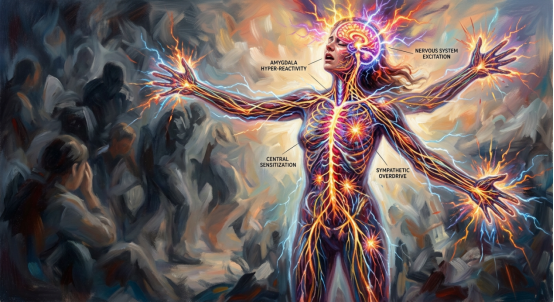
This means that the body’s stress hormone, cortisol, might be released in response to even little emotional cues. Aberrant levels of glutamate and oxytocin in the brain, as well as reduced levels of serotonin, a hormone essential in mood regulation. These hormones regulate the severity of anxiety symptoms and how you react in social situations. Heightened sensitivity in brain regions that regulate emotion and mood. If you’re experiencing persistent sadness or loss of interest in daily activities, learn more about depression and ways to cope with it in our guide: Self-Help Tips for Depression: 18 Ways to Cope That Actually Work.
Some Additional Risk Factors
The following are additional risk factors for the development of social anxiety disorder:
Inherited Characteristics: It is common for anxiety disorders to run in families. It’s unclear, though, how much of this may be inherited and how much may be acquired behavior.
The Structure of the Brain: The amygdala is a brain structure that may be involved in regulating the fear response. Individuals with an overactive amygdala may experience more anxiety in social circumstances due to a heightened fear reaction.
Environment: Some people may have severe anxiety following an uncomfortable or embarrassing social setting, suggesting that social anxiety disorder may be a learned behavior. Additionally, social anxiety disorder may be linked to parents who are more controlling or overprotective of their kids or who model nervous behavior in social circumstances.
This Condition’s Complications
Social anxiety disorder can have a significant impact on your life if left untreated. It may result in:
- Leaving school
- A decline in work output
- Relationship problems
- A general decline in life quality
- Additionally, it may make you more susceptible to mood problems, substance use disorders, and other anxiety disorders.
The good news is that treatment can have a significant impact. It might aid in avoiding these issues.
Risk Variables
The likelihood of acquiring social anxiety disorder can be raised by a number of circumstances, including:
A Family History: If your siblings or biological parents suffer from social anxiety disorder, you are more likely to get it yourself.
Adverse Experiences: Social anxiety disorder may be more common in kids who are teased, bullied, rejected, ridiculed, or humiliated. Furthermore, this disease may be linked to other adverse life experiences such as family strife, trauma, or abuse.
Temperament: When confronted with unfamiliar circumstances or individuals, children who exhibit shyness, timidity, withdrawal, or restraint may be more vulnerable.
New Expectations At Work or In Social Situations: Symptoms of social anxiety disorder usually begin in adolescence, but they can also be triggered for the first time by meeting new people, giving a speech in front of an audience, or making a significant professional presentation.
Having a Condition or Appearance That Attracts Notice: For instance, Parkinson’s disease-related tremors, stuttering, or facial deformities might make patients feel more self-conscious and perhaps cause social anxiety disorder.
Statistics
About 15 million adult Americans suffer from social anxiety disorder. Social anxiety is the third most prevalent mental illness in the US, with a 12-month prevalence rate of 6.8%, according to the US National Comorbidity Survey.
According to statistics, women are more likely than males to suffer from social anxiety disorder.
Less than 5% of individuals with social anxiety disorder seek therapy within a year of the condition’s initial manifestation, despite the availability of effective treatments.
Before seeking treatment, almost one-third of patients report having symptoms for ten years or more. According to one study, adopting cognitive behavioral therapy alone allowed 85% of subjects to significantly improve or recover.
Cure
Psychotherapy, medicine, or a combination of the two can effectively treat social anxiety disorder. The goals of treatment are to lessen anxiety, enhance social functioning, and avoid side effects like substance abuse or despair.
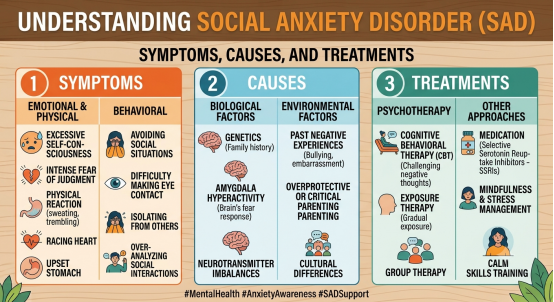
Cognitive behavioral therapy (CBT): The most successful treatment is cognitive behavioral therapy (CBT), which focuses on altering negative thought patterns and social situation-related actions. Exposure therapy, which gradually confronts fearful circumstances in a safe setting, may be a component of CBT.
ACT, or acceptance and commitment therapy: Assists people in accepting their anxiety and making meaningful commitments in spite of their fear.
Group Therapy: Offers peer support and social practice.
Beta-blockers During performance settings can assist in controlling physical symptoms.
Other Anti-Anxiety Drugs: May be used temporarily under a doctor’s supervision.
Coping Mechanisms and Self-Help: Exposure to social situations gradually. Techniques for relaxation, such as mindfulness or deep breathing.
Reframing Negative Ideas
Steer clear of alcohol and other substances that could exacerbate anxiety. People with social anxiety disorder can lead productive lives, develop better social skills, and gain confidence with regular treatment. In order to avoid long-term impairment, early intervention is very helpful. Social anxiety can sometimes leave a person feeling isolated, overwhelmed, or emotionally drained. When these feelings persist, they may also be accompanied by symptoms of depression. If you’re experiencing ongoing sadness, loss of interest, low energy, or emotional withdrawal, learn more about the signs of depression in women, its possible causes, and treatment options in our detailed guide.
Conclusion
More than just shyness, social anxiety disorder is a recognized mental health issue that can have a substantial impact on relationships, education, employment, and general quality of life. Fortunately, it is very treatable. Many people are able to control their anxiety and restore confidence in social settings with the correct combination of treatment, lifestyle modifications, self-help techniques, and, when necessary, medication.
Seeking expert assistance is a crucial first step if your ongoing anxiety about social situations is interfering with your day-to-day activities. Early intervention can help you develop better coping mechanisms and stop symptoms from getting worse.
Recall that recovery is a journey and that you can overcome social anxiety and lead a more self-assured, satisfying life with perseverance, support, and the appropriate treatment plan.
Frequently Asked Questions
1. Describe social anxiety disorder.
A mental illness known as social anxiety disorder is characterized by a severe fear of social interactions and being judged by others.
2. What are the typical signs of social anxiety disorder?
Excessive dread, perspiration, shaking, blushing, and avoiding social situations are typical signs.
3. What is the source of social anxiety disorder?
Genetics, brain chemistry, personality traits, and life events can all contribute to it.
4. What is the course of treatment for social anxiety disorder?
Medication, lifestyle modifications, and cognitive behavioral therapy (CBT) are common forms of treatment.
5. Is there a cure for social anxiety disorder?
With the correct care and assistance, most patients may successfully manage their symptoms, even though there might not be a long-term solution.