

Many new mothers find that the days after the arrival of a newborn are neither peaceful nor joyful. Rather, they are characterized by incessant checking, a constriction in your chest, hormonal change, and racing thoughts. Even when everything appears “fine,” you may feel uneasy and wonder why you are unable to unwind or savor the moment as you would have liked. Postpartum overwhelm can make early motherhood feel emotionally exhausting.
Postpartum anxiety is the term for this phenomenon. And it can be immensely comforting to understand. Not because it instantly makes everything go away, but rather because it serves as a reminder that your feelings are genuine, typical, and manageable. Postpartum anxiety, in my opinion, is an indication that your nervous system needs support and care rather than something you should ignore.
Symptoms of postpartum overwhelm
Anxiety after giving birth can manifest physically and emotionally. Typical indicators consist of:
- Constantly worrying about your baby’s well-being, security, or sleep.
- Being anxious, tight, or unable to relax.
- Physical signs such as nausea, dizziness, shortness of breath, or a beating heart.
- Having trouble falling asleep even when you have the chance.
- Unsettling or out-of-character ideas that are recurring or bothersome.
If you see yourself in this situation, it indicates that your system is overloaded rather than that you are failing.
After giving birth, why am I feeling so overwhelmed?
Let’s examine the underlying factors that are causing your mental, emotional, and physical exhaustion.
1. The Work No One Sees: The Mental Load
The ongoing, unseen burden of maintaining everything is known as the mental load.
You’re doing more than just feeding the infant. You’re keeping track of wake windows, remembering when they last ate, wondering if you need to see a doctor about that rash, and estimating how long it will be before you have another breakdown.
Everyone’s needs, including your own, which inexplicably always end up at the bottom of the list, are under your project management. This cognitive work is tiresome, but it is frequently overlooked and unappreciated. According to a source worldwide, about 10% of pregnant women and 13% of women who have just given birth experience a mental disorder, primarily depression.
2. Invisible Labor: Completing All Tasks That Don’t “Count”
A to-do list doesn’t include a lot of postpartum labor:
- Spending hours with a weeping infant
- Looking up how to handle a cradle cap on Google at two in the morning
- Practicing in your head how to ask your partner for additional assistance (again)
- Fearing that your infant isn’t getting enough food, sleep, or “normal” development
- This labor is unrelenting.
Additionally, it can seem like it “shouldn’t” be difficult because it is underpaid, unmeasured, and frequently unidentified. However, it is. It is, of course.
3. Unrealistic Motherhood Expectations

You’ve been instructed that being a “good mom” entails:
- Never in need of assistance
- Being thankful all the time
- Prioritizing your needs
- Grinning despite the confusion.
So what happens if you don’t feel thankful, patient, or happy all the time? The guilt comes flooding in. Shame begins to seep in. Suddenly, you’re not only feeling overburdened; you’re also blaming yourself for it.
The burden of perfectionism is this. of social conditioning. of patriarchal, unattainable norms.
Not your own shortcomings.
Postpartum overwhelm: When Concern Is Persistent
Postpartum anxiety is well-known. Anxiety following childbirth might manifest as:
- Thought racing
- Continuous concern
- Having trouble unwinding
- Being tense
- Having trouble falling asleep even when the infant is napping
- Repeating the worst-case situations
- Feeling accountable for averting every potential issue
- After having a child, some anxiety is common.
- Suddenly, your environment has a new sense of value.
However, it could be time to get help if concern starts to consume your days or interfere with your ability to operate.
8 Calm Strategies to Handle Postpartum Overwhelm
To feel better, you don’t have to completely change your routine. You can lessen the pressure you are under by making small, practical adjustments.
1. Reduce Your Daily Life Expectations
For the time being, your top objectives might be nursing your infant, recuperating physically, eating, drinking water, and getting as much sleep as you can.
Laundry can wait. The house doesn’t have to be flawless. Dinner doesn’t have to be fancy.
For the day, pick one or two jobs that are absolutely necessary and leave the rest up to your imagination.
2. Request Particular, Useful Assistance
People may wish to assist but are unaware of your needs. It may be simpler for them to assist you if you make specific demands. For instance, you could ask someone you can trust to:
- Bring groceries or prepare a dinner.
- While you take a shower or relax, hold the infant.
- Assist with housework and washing.
- Accompany you to a doctor’s appointment.
- Assume responsibility for a certain task related to baby care.
Make arrangements for assistance before you become completely exhausted, if at all feasible. Accepting assistance is a practical aspect of taking care of a newborn, not a sign of weakness.
3. Preserve Brief Rest Periods
Even though you can’t always predict when your kid will wake up, you can occasionally give them brief opportunities to recuperate. Try lying down when a reliable caregiver can securely take care of your child, taking a few deep breaths, listening to relaxing music, or sitting quietly while someone else keeps an eye on the infant.
It’s not necessary to sleep at every break. You could feel less burdened after even a short period of time without expectations. Place your infant on their back in a secure, private sleeping area and get assistance so you may rest if you become dangerously sleepy while holding or feeding your child.
4. Give Up Comparing Your Motherhood Experience to Others

You can’t observe another mother’s entire situation, support network, health, or challenging times, even though her routine may appear effortless.
You are responsible for your own healing, feeding experience, feelings, and family circumstances.
Reduce the number of social media accounts that make you feel unworthy. Instead of making motherhood seem like a show, trust sites that offer caring, factual information.
It is not necessary for you to demonstrate that you are managing effectively.
5. Be Open About Your Emotion
Hiding uncomfortable emotions can exacerbate feelings of guilt and loneliness. Speak with a trusted person and attempt to explain the true situation. You could explain, “I love my baby, but I feel overwhelmed and I need someone to listen without judging me.”
To preserve other people’s expectations, you don’t need to project a positive image of yourself.
A physician or other licensed mental health practitioner can assist you in understanding the cause of your ongoing anxiety, depression, panic attacks, or emotional distress and determine the best course of action.
6. Create Room for Yourself Apart from Motherhood
Even though your life has altered, you are still a person with preferences, interests, and aspirations.
Reconnect with minor hobbies that make you feel like yourself when you’re ready. This could be making a phone call to a buddy, reading a few chapters of a book, sipping your favorite beverage, or dedicating some time to a personal hobby.
You don’t have to go back to your old routine right away. The idea is to keep in mind that your health is just as important as your baby’s requirements.
7. Control Your Feelings
One moment you might be joyful and the next you might be crying. You could feel bonded to your child and then wish you could get away from the ongoing obligation.
Try accepting these feelings without passing judgment on them rather than berating yourself for them.
You may think to yourself, “This is a challenging time. I’m free to feel exhausted and seek assistance.”
Ignoring issues is not a sign of self-compassion. It entails treating your difficulties with the same compassion that you would show someone you love.
8. Get Expert Assistance When You Need It
You don’t have to handle every emotional obstacle by yourself. A medical expert can evaluate your symptoms, take into account aspects of your physical and mental well-being, and suggest the right kind of assistance. This could involve counseling, psychotherapy, practical assistance, or, where necessary, medication administered by a licensed clinician, depending on your needs.
Some moms may find that cognitive behavioral therapy (CBT) helps them deal with problematic thought patterns, anxiety, and feelings of helplessness. Early support can have a significant impact. Even if you are still able to fulfill your everyday obligations, you nevertheless deserve care.
When Should You Get Help Right Away?
Certain postpartum symptoms need immediate medical treatment. If you have thoughts of hurting yourself or your child, feel helpless to protect yourself or your child, become extremely confused, or have strong beliefs or hallucinations that other people know are false, get medical attention right away.
A mental health issue that can arise quickly following childbirth is postpartum psychosis.
Don’t wait for your symptoms to go away on their own. Get in touch with your local emergency services and ask someone you can trust to stay with you and help keep you and your child safe if you are in imminent danger.
Final Thought
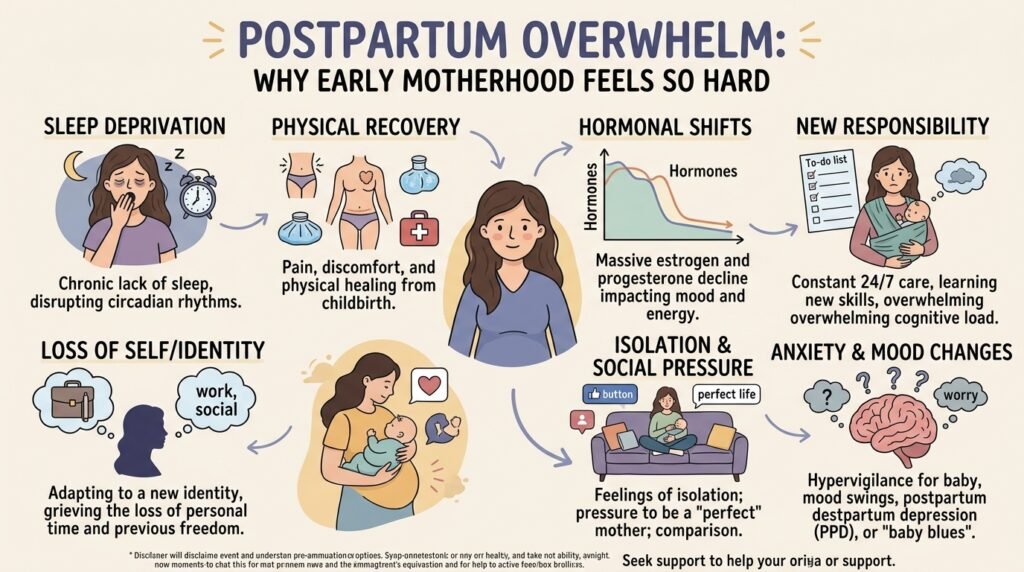
A woman is recovering, adjusting, and taking care of a newborn all at once, frequently with little sleep and support, which makes early motherhood extremely difficult. Feeling overburdened is not a sign of personal failure but rather a typical reaction to a significant life transition. You are not alone; approximately 13% of new mothers globally suffer from a mental health condition.
Accept assistance, take breaks when you can, and communicate honestly with those you can trust. See a physician or mental health specialist if depression, anxiety, or tiredness persists after the first few weeks or interferes with day-to-day functioning. You deserve assistance because these problems are treatable.