
What is social anxiety?
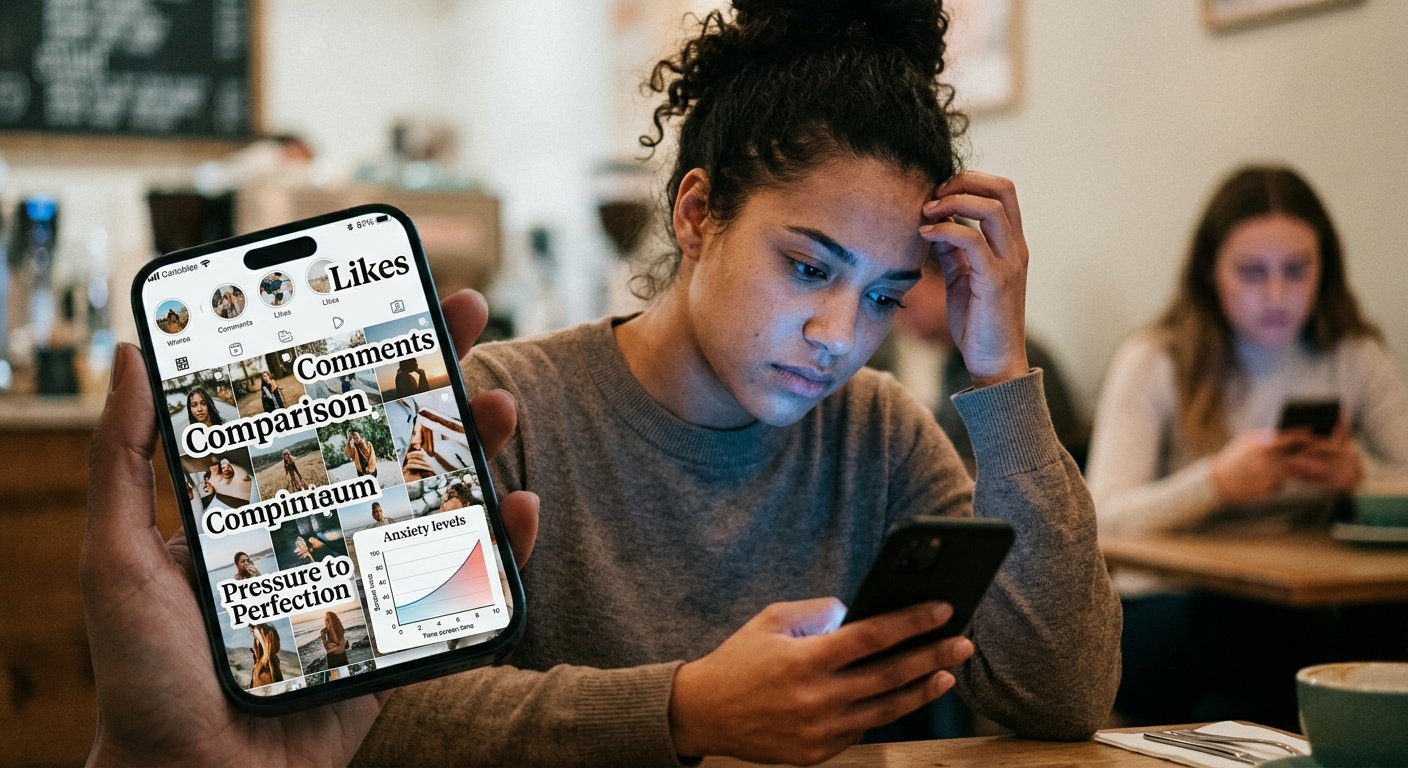
Butterflies in your stomach and occasional nervousness before a large presentation are not the only symptoms of social anxiety. It’s a fear of being rejected, judged, or humiliated by others. It’s the overwhelming anxiety that prevents you from raising your hand in class, the anxiety you get prior to a social event, or the fear that even a small error could result in embarrassment. Learning how to overcome social anxiety can help you feel more comfortable and confident in everyday social situations.
One of the most prevalent mental health disorders is social anxiety, which can appear in a variety of seemingly ordinary, everyday situations, such as striking up a conversation at a party, socializing with strangers, or even eating in front of others. It can be so severe for some people that they either totally shun social gatherings or experience them with such tension that they are unable to concentrate on anything else.
Shyness vs. Social Anxiety
Both can experience discomfort in social settings, but social anxiety is far more severe, widespread, and frequently interferes with day-to-day activities.
Shyness is a transient, context-dependent emotion that typically goes away with repeated exposure. Avoidance behavior, especially in familiar contexts, is a hallmark of chronic social anxiety.
While social anxiety can result in severe physiological and emotional reactions that make even routine interactions frightening, shyness can induce mild anxiety. Knowing the difference is the first step in overcoming social anxiety.
Effective Strategies for Overcoming Social Anxiety
It takes time and tried-and-true strategies to overcome social anxiety. Over time, employing these strategies can help reduce anxiety and foster social confidence. There are the following strategies that are more effective to overcome social anxiety.
CBT, or Cognitive Behavioral Therapy
CBT assists a person in analyzing their negative thoughts and substituting them with constructive ones. It emphasizes healthier coping strategies and unreasonable anxieties. By progressively establishing constructive thought patterns that might help eliminate social anxiety, therapists use cognitive behavioral therapy (CBT) to dismantle false beliefs.
Exposure Therapy: Overcoming Your Fears
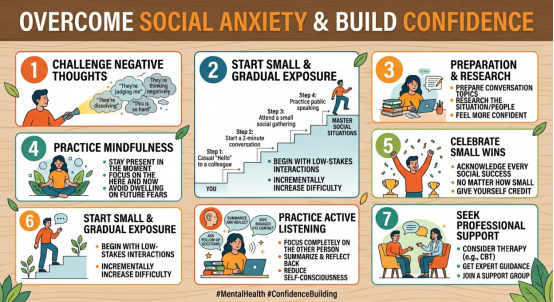
Anxiety reactions can be desensitized by exposing oneself to anxiety-inducing circumstances gradually. The idea is to start modest and work your way up to more complicated situations. For instance, brief discussions or intimate get-togethers can eventually result in increased social confidence.
Techniques for Relaxation and Mindfulness
Deep breathing, progressive muscular relaxation, and meditation are among techniques that lower stress and increase present-moment awareness. These methods work incredibly well for lowering social anxiety. They lessen thoughts of self-criticism. They encourage serenity when interacting with others.
Keeping a Journal to Monitor Development and Determine Triggers
Writing down ideas and experiences might be useful for tracking development and understanding the pattern of worry. Additionally, it fosters emotional clarity and self-awareness. While attempting to overcome social anxiety, keeping a notebook is very beneficial for identifying triggers and acknowledging minor victories.
Progressive Social Exposure
Increase engagement gradually after beginning with low-pressure social activities. Confidence grows in this way when favorable experiences are repeated. Volunteering or taking a community class can provide chances to engage with people in a safe setting, which can aid in overcoming social anxiety. If social anxiety is also affecting your mood or daily life, you may find helpful strategies in our guide on self-help tips for depression and ways to cope: Self-Help Tips for Depression: 18 Ways to Cope That Actually Work.
Modifications to Lifestyle to Lower Social Anxiety

Face Your Anxious and Pessimistic Ideas
There may be moments when you feel as though there is nothing you can do to change your thoughts and feelings. However, there are actually some things that can be beneficial. One useful strategy to lessen social anxiety symptoms is to challenge your mindset and pessimistic ideas. Start by recognizing the nervous thoughts that come to mind when you think about social situations.
After that, examine and question these ideas. Ask yourself why you think this way and whether your initial response truly reflects your feelings or if you’re just always thinking the worse. Although it takes time and is not a quick remedy, it is possible to change your way of thinking because the mind is a strong tool.
Pay Attention Can Overcome Social Anxiety
You can be present and aware of your thoughts and feelings in a positive and nonjudgmental way by practicing mindfulness and mindful meditation. Researchers discovered that meditation affects activity in specific brain regions in a study that was published in the journal Social Cognitive and Affective Neuroscience. Four 20-minute mindfulness meditation sessions were attended by individuals with normal anxiety levels. Following mindfulness training, they observed a 39% reduction in anxiety.
Retraining Your Breathing
Breathing may be more tense and irregular for many persons who suffer from social anxiety. Dizziness, headaches, weakness, and stiffness in the muscles can all be symptoms of unbalanced breathing.
People who breathe anxiously are also more prone to react to stressful events with panic or extreme anxiety. One method for returning to a baseline breathing pattern is breathing retraining. This is a straightforward method that involves taking a deep breath, holding it for a short while, and then gently exhaling.
Appreciate Little Triumphs
Acknowledging little accomplishments is essential for social anxiety management. It takes time to overcome worry, and acknowledging small victories increases motivation and self-assurance. Useful advice for commemorating successes:
Establish Attainable Objectives: Divide more ambitious objectives into smaller, more doable activities.
Maintain a Journal: To monitor your progress and motivate yourself, note instances in which you successfully deal with worry.
Slow Exposure
A progressive exposure approach can be useful for dealing with frightening situations. Over time, this may help you become less sensitive to frightening circumstances. As you feel more at ease, progressively increase exposure. Start with tiny, reasonable steps. It is crucial to keep in mind that it is not a race. Make it a marathon that prioritizes progress over perfection since this is your actual life.
Make Reasonable Objectives
Setting reasonable, attainable goals is a part of letting go of unrealistic or perfectionist aspirations. When it comes to controlling anxiety in social settings, it is the same.
Whether you’re going to a low-key social event or striking up a discussion with a stranger, aim for tangible outcomes. Celebrate your accomplishments, no matter how minor. Over time, this will boost your self-esteem and drive to make money. Locate social settings and participate. Make a deliberate effort to interact with more people.
Seek out Encouraging Social Settings
This can assist you in overcoming your phobias. Start with a lesson that teaches social skills. Before you go out into the real world, you may properly practice social interactions here. This will provide you with some advice on what to say and do in social situations that you are uncomfortable or unfamiliar with.
Face Your Fears to Overcome Social Anxiety
Facing your anxieties is the last stage. If you avoid circumstances that cause you worry, you will never be able to overcome social anxiety. You won’t be assisting yourself or promoting personal development if you use avoidance as a coping mechanism.
Exposure therapy, or confronting your anxieties, is a successful treatment for anxiety disorders, according to numerous research. However, research does indicate that exposure should be used sparingly. Therefore, start with a social encounter or activity that makes you feel a little anxious and work your way up.
Practice Speaking in Front of an Audience
Even those without social anxiety often have a dread of public speaking. This dread can be exacerbated by the spotlight effect, which is the idea that everyone is staring at you. Try practicing in front of a mirror or a small group of friends, or join a public speaking group. Even if it sounds scary, you’ll get more at ease the more you do it.
Turn Your Attention From Yourself to Other People
Fear of being judged is a common cause of social anxiety. We could get overly preoccupied with ourselves and think that everything we do is being watched. Changing your attention to other people might be beneficial. Focus on the conversation and those around you when you’re in social situations.
Pose queries and express sincere interest in the answers. This change can lessen social anxiety and feelings of self-consciousness. According to states, it is estimated that around 4% of the global population suffers from anxiety disorders, making anxiety, along with depression, one of the most common mental health concerns worldwide.
Have Patience With Yourself
Being mindful is a skill that requires practice. Don’t worry if your thoughts start to stray. It’s entirely typical. Just bring your Visualize Success each time it occurs.
Did you know that William Arthur Ward once said, “If you can imagine it, you can achieve it”? Visualization strategies can help you envision yourself successfully overcome social anxiety, even though it doesn’t happen instantly. These images have the potential to reduce anxiety and boost confidence over time, leading to favorable results.
Look for Assistance to Overcome Social Anxiety
It’s crucial to keep in mind that you don’t have to handle everything by yourself. Even though it may seem counterintuitive, asking friends, family, or support groups for encouragement can be very beneficial while coping with social anxiety disorder. Talk about your experiences with people who can identify with you to lessen emotions of stigma and loneliness.
A healthy way of living
Maintaining a healthy lifestyle is part of taking care of your mental health. Make self-care a priority by eating a balanced diet, exercising frequently, and getting enough sleep. In addition to improving mood and general well-being, a holistic approach helps lessen symptoms of social anxiety. Social anxiety can sometimes affect your mood and emotional well-being. If you’re also experiencing persistent sadness, loss of interest, low energy, or withdrawal from others, explore our guide on the signs of depression in women, their causes, and treatment options to better understand these symptoms.
Conclusion
It takes time, self-compassion, and persistent work to overcome social anxiety. Even while anxiety and self-doubt might not go away right away, you can make significant progress by using constructive coping mechanisms, confronting negative ideas, and stepping outside of your comfort zone. Repeatedly having good experiences and developing self-assurance in social settings are key components of confidence building. Recall that while setbacks are a natural part of development, every attempt you make moves you closer to becoming more at ease, self-assured, and socially connected. It is possible to conquer social anxiety and have a more satisfying social life with perseverance and the appropriate assistance.
Frequently Asked Questions
1. Can social anxiety be overcome?
Indeed. Many people are able to effectively manage social anxiety with practice, treatment, and constructive coping mechanisms.
2. How can one develop confidence?
Start with tiny social contacts, question negative beliefs, and applaud your progress.
3. How can I reduce my social anxiety?
Breathe deeply, plan ahead, and put the conversation’s needs ahead of your own.
4. Are shyness and social anxiety the same thing?
No. While shyness is a personality attribute, social anxiety is a mental health issue that results in a strong dread of being judged.
5. When is the right time to get professional assistance for social anxiety?
It’s a good idea to speak with a mental health professional if social anxiety affects your relationships, career, or academic pursuits.