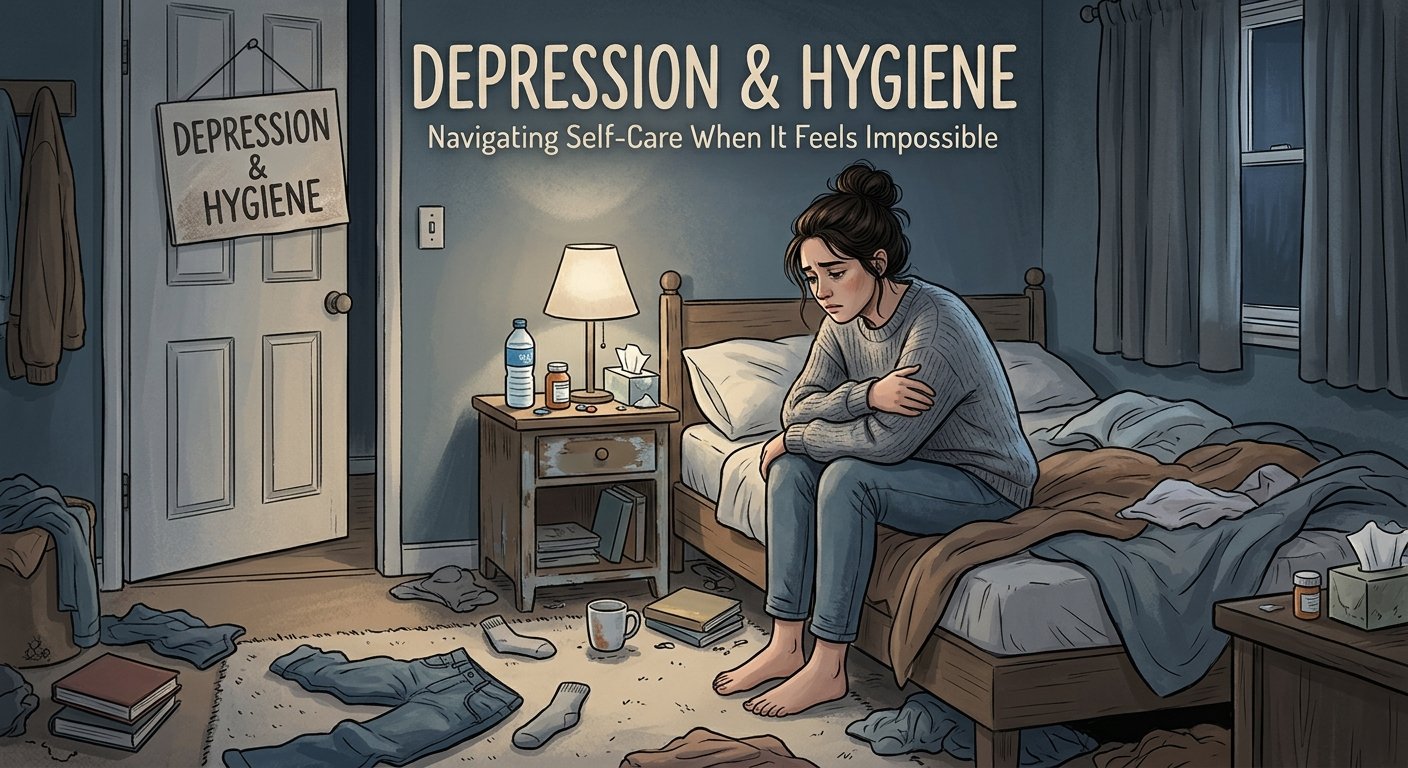
Depression is not a glamorous condition. The way depression and hygiene are connected can be one of the most embarrassing symptoms. People cease taking showers, brushing their teeth, washing their hair, changing their clothes, and following routines that used to happen almost naturally when they are depressed.
You may avoid social situations because you don’t feel presentable. You might stop responding to texts or stay home due to shame about your personal hygiene. As a result, reduced social interaction can leave you spending more time alone with your thoughts. Depression becomes more audible. Self-criticism becomes more severe. The loneliness grows. Changing that reality frequently starts with an understanding of it.
The Relationship Between Hygiene and Mental Health
Basic hygiene routines seem onerous when depression impairs motivation, energy levels, and self-worth. It can seem impossible to take a shower or brush your teeth when you’re tired and lacking in energy. Additionally, depression affects executive functioning, which makes it challenging to organize and start self-care practices.
Physical health problems brought on by poor hygiene may make depression symptoms worse. Gum disease and tooth decay are made more likely by inadequate dental care. Body odor and skin issues might result from infrequent bathing.
Keeping oneself clean can improve one’s mood and sense of self. Taking care of oneself can provide one a sense of control and success, two things that depression frequently lacks.
Identifying the signs of indifference to hygiene
Hygiene apathy is more than just occasionally missing a shower; it’s a more serious problem that can have detrimental effects on your physical and emotional well-being.
You may be experiencing hygiene indifference if you exhibit any of the following symptoms:
Frequent bathing or showering: Not taking a bath for days or weeks might be a sign of poor hygiene. Which causes depression as well as stress and anxiety.
Ignoring oral hygiene: Not brushing your teeth on a regular basis.
Wearing the same clothes for long periods of time: If changing clothes is too onerous, this may indicate a lack of concern for hygiene.
Avoiding grooming tasks: Putting off doing things like shaving, hair maintenance, or nail cutting over extended periods of time.
bodily discomfort: Feeling uneasy or observing a bodily deterioration brought on by poor hygiene, such as skin problems or foul breath.
Poor Sleep: Disrupted or uncomfortable sleep can produce depression, affect mood, increase stress, and contribute to depressive symptoms over time.
Why Depression Makes Hygiene So Hard
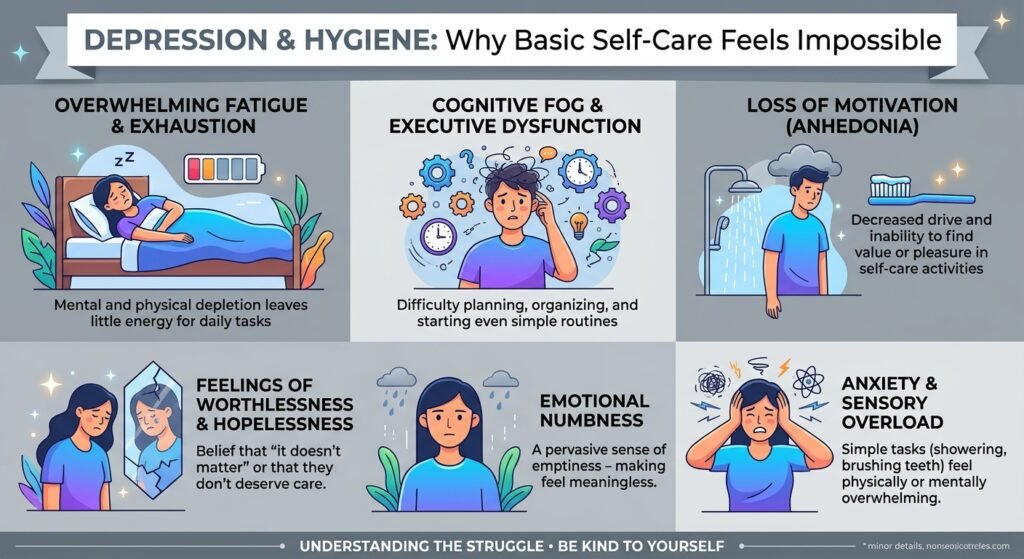
Depression is more than just melancholy. It is a medical disorder that causes disruptions to the brain’s energy, reward, and motivation systems, making simple tasks seem abnormally challenging.

The Reward System and Anhedonia
The diminished ability to feel pleasure or anticipate reward is known as anhedonia. Most people are motivated to do those duties by the idea of feeling clean after taking a shower or the satisfaction of having fresh teeth. That anticipatory reward is dampened by depression. There is no incentive to begin the work because your brain actually cannot foresee that you would feel better afterward.
Impairment of Executive Function
In reality, hygiene activities are not easy. Choosing to take a shower, locating clothing to wear afterward, gathering supplies, controlling the water’s temperature, and planning the sequence of washing, getting out, drying, and dressing are all necessary. The executive function networks that manage initiation, planning, and sequencing are compromised by depression. When you’re depressed, every step that looks insignificant when you’re well turns into a challenge.
Depletion of Energy and Fatigue
Physical exhaustion brought on by depression is unrelated to your level of activity. There is actually less energy available to your body. When you’re feeling well, tasks that take minutes can seem to require energy that you don’t have.
Sensitivity to Sensations
Many people who are depressed are more sensitive to things that they wouldn’t normally be bothered by, such as the sound of running water, the sense of cold air after going outside, or the sensation of brushing their teeth. The brain rejects what appears to be a typical experience because it becomes overwhelming.
Distortions in Cognition
Certain thought patterns that are detrimental to hygiene are brought on by depression, such as “It doesn’t matter,” “Nothing makes a difference,” “Why bother when I’m just going to feel terrible anyway,” and “I deserve to feel disgusting.” Although these beliefs are symptoms of depression rather than accurate reflections of reality, they feel real and undermine motivation.
Depression-Related Psychological Causes of Poor Hygiene
Depression affects the brain, changing motivation and erecting a mental wall around everyday tasks. Depression and cleanliness are related because depression impairs the brain’s capacity to carry out tasks that call for preparation, energy, and effort. Poor hygiene during depression can be explained by the following psychological factors:
1. Insufficient drive and enthusiasm
2. Depression depletes energy, making people feel worn out and uninspired. Routine hygiene tasks appear burdensome because of this weariness.
3. A sense of worthlessness
4. Low self-worth is a common symptom of depression. Maintaining personal hygiene may not seem important to someone who feels inadequate because they think they don’t deserve it or that it doesn’t matter.
5. Impaired Cognitive Function
6. Memory, focus, and decision-making are all impacted by depression. Depression might make it difficult for a person to plan or remember their hygiene regimen.
Common Depression and Hygiene Challenges

Even simple personal hygiene duties can be too much for people who are depressed. Everyday self-care can seem like a huge challenge due to low energy, diminished motivation, difficulties focusing, and feelings of pessimism.
Bathing and Showering: Depression can deplete a person’s emotional and physical reserves, making the idea of taking a shower feel draining. It could take more work than normal to even get up, put on clean clothing, and finish a basic bathing routine.
Dental Care: When motivation is low, it can be challenging to continue brushing and flossing. When faced with exhaustion and problems focusing, a person may simply forget these responsibilities, or they may appear small in comparison to emotional struggles.
Changing Clothes: When someone is depressed, getting dressed in clean clothes could seem like an unnecessary effort. Because of this, individuals might stay in the same clothes for a few days, particularly if they lack the stamina to go about their regular daily activities.
Grooming and Personal Appearance: Tasks like shaving, combing hair, cutting nails, and styling hair may progressively lose significance. A person may believe that maintaining their looks is no longer important when depression negatively impacts their sense of self-worth and interest in day-to-day activities.
Time perception can be distorted by depression, which can result in inadvertent disregard for personal hygiene practices. The incapacity to experience pleasure, or anhedonia, can render normally pleasurable acts like taking a warm shower pointless.
Depression is frequently accompanied by social isolation, which lowers external incentive to preserve looks. This may lead to a vicious cycle that worsens depression symptoms and reduces social contact.
A 2025 study of 1,913 undergraduate students in Dhaka, Bangladesh, found that students at risk of depression had 65% lower odds of maintaining better personal hygiene practices than students not at risk.
Tips for Maintaining Hygiene When Coping with Depression
Even though it can be challenging to maintain personal hygiene when depressed, there are tiny, doable actions that can assist. Here are a few tactics to think about:
1. Divide tasks into manageable steps
Instead of viewing hygiene as a single, large chore, divide it up into smaller ones. For instance, start with only cleaning your face or rinsing your body rather than concentrating on taking a whole shower. You may make hygiene seem less daunting by starting simple.
2. Make Reasonable Objectives
Establish attainable objectives, like taking a shower twice a week or cleaning your teeth once a day. You can progressively raise these objectives as you get more at ease.
3. Make Use of Hygiene Reminders
Set up reminders on your phone or throughout your house to remind you to take care of your hygiene. The forgetfulness and lack of motivation linked to depression can be overcome with these modest prods.
4. Increase the Comfort of Hygiene Activities
Make hygiene chores more enjoyable by creating a cozy space. For instance, you could get soft towels, light a fragrant candle, or play relaxing music in the bathroom. To lessen physical strain, use a shower chair if sitting in the shower seems more comfortable.
5. Look for Assistance
If the neglect of hygiene worsens, think about getting help from a specialist. Counseling or emotion therapy can offer advice on cleanliness and depression management. You can learn coping mechanisms, comprehend psychological obstacles, and improve your self-care practices with the assistance of a mental health expert.
6. Engage in Self-Compassion
Remember that having poor hygiene is not a reflection of your value when you’re depressed. Recognize that you’re doing your best and cultivate self-compassion. It takes time to overcome hygiene neglect, and it’s acceptable to start small.
Among students classified as being at risk of depression, 79.5% still reported good hygiene, while 19.2% had moderate hygiene practices and 1.3% had poor hygiene practices. This shows that depression does not affect everyone’s self-care in the same way.
A Gentle Reminder: Small Steps Matter
Basic hygienic activities like taking a shower, brushing your teeth, and changing your clothes might become overwhelming when you’re depressed. Self-care might be challenging due to low energy and lack of drive, but these issues are not an indication of laziness or personal failure. Hygiene can be made easier by establishing a basic daily regimen and beginning with small, doable actions.
Additionally, it’s critical to practice self-compassion and refrain from feeling bad about challenging activities. Consider getting help from a licensed healthcare provider if poor hygiene continues or starts to interfere with your day-to-day activities. Managing everyday self-care can progressively get easier with the correct assistance and care.
Frequently Asked Questions
1. Is it possible for sadness to interfere with personal hygiene?
Indeed. Fatigue, low motivation, trouble focusing, and a loss of interest in daily tasks are all signs of depression. Changing clothing, taking a shower, and brushing your teeth can become taxing due to these sensations.
2. What causes depressed individuals to cease taking regular showers?
Individuals who are depressed may feel emotionally overburdened by daily duties or have little energy. When motivation is low, even getting ready for a shower can feel like too much work.
3. Does a lack of hygiene indicate depression?
One potential indicator of depression is poor hygiene, especially if it coexists with low energy, sleep disturbances, loss of interest, or chronic melancholy. However, depression is not always caused by inadequate hygiene.
4. How can a person in depression enhance their personal hygiene practices?
Start with little, doable chores like changing your clothes, washing your face, or brushing your teeth once. It might also be beneficial to adopt a flexible schedule, keep hygiene supplies close at hand, and set easy reminders.
5. When should someone seek professional assistance.
When hygiene issues continue, interfere with day-to-day activities, or coexist with other depressive symptoms, think about getting professional assistance. A medical professional can assist in determining the root problems and suggest suitable assistance or therapy.