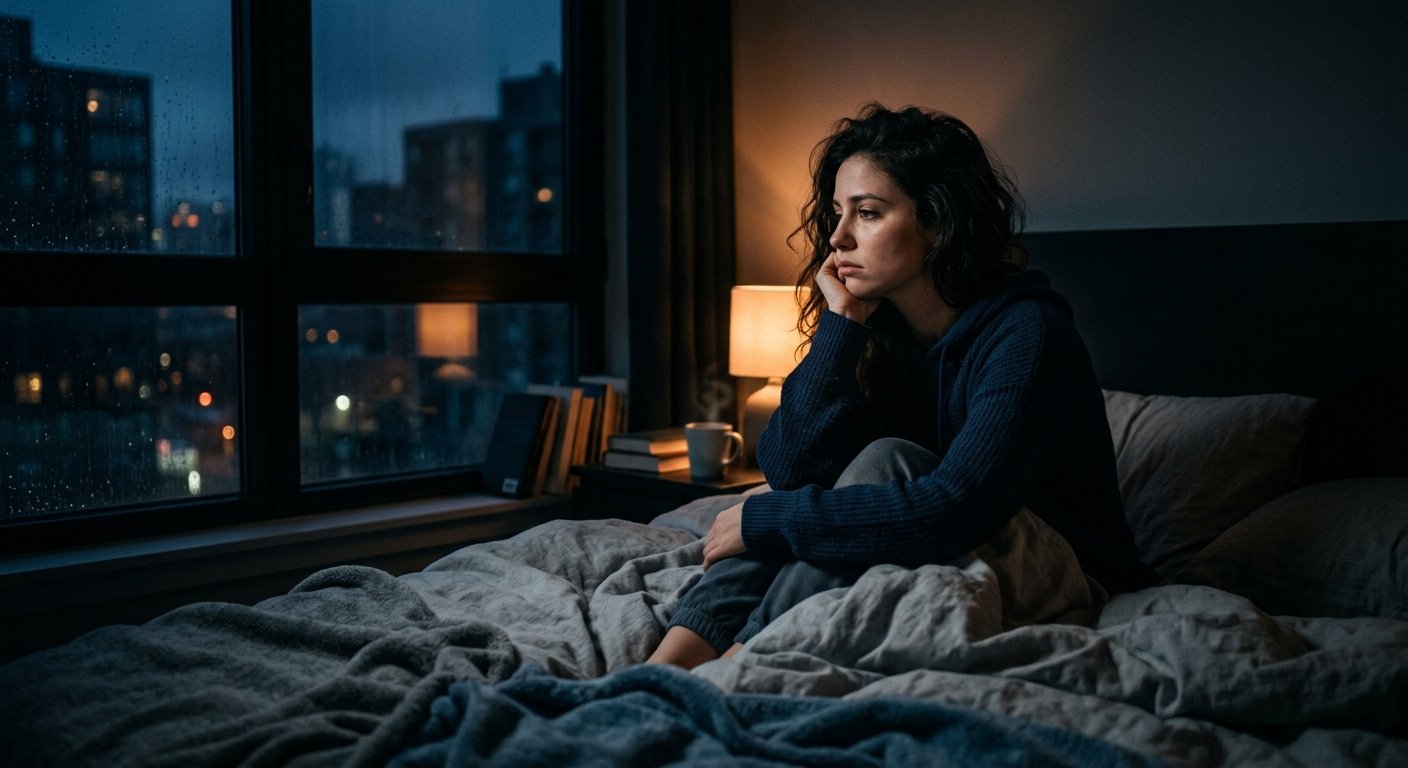
Depression that worsens in the evening or at night is known as nighttime depression. If you often wonder, “Why Do I Feel Sad at Night,” it may be difficult for you to cope or wind down at the end of the day if you experience intense grief, hopelessness, or emotional weight. Some people may find it difficult to get or remain asleep as a result, which can exacerbate their depression and cause weariness, irritability, and trouble focusing during the day.
Changes in circadian rhythms, hormone imbalances, and an increase in unpleasant thoughts and feelings that typically surface at night are some of the variables that may contribute to nocturnal depression. Depression at night can therefore have a major effect on day-to-day functionality and quality of life.
Major depressive disorder symptoms
The following indicators could suggest that your depressive sensations are indeed symptoms of clinical depression, a treatable mental illness:
- Persistent depressive, worthless, and/or guilty sentiments
- Weight, appetite, and/or sleep pattern changes
- Loss of enjoyment from things you used to love
- Having trouble focusing
- The sensation of slowing down
- Anxiety or restlessness
- Weariness
It could be time to get professional help if you have any of these symptoms, particularly if they are affecting your daily functioning, creating relationship issues, employment, education, or a general feeling of well-being. If you are diagnosed with depression, a physician or therapist can do a screening and offer therapy recommendations.
Typical Trends That Make Nighttime More Difficult
The natural evening decline is amplified by a number of behavioral patterns. Unlike genetics or circadian biology, they are all adjustable, thus understanding them is helpful.
Late-night social media use: Social comparison, which has been repeatedly linked to poorer self-esteem and more depression symptoms, is triggered by scrolling through carefully chosen highlights of other people’s lives.
Poor sleep hygiene: The circadian clock is desynchronized by irregular sleep schedules, which increases the volatility and unpredictability of evening mood regulation.
Eating badly or skipping meals: Anxiety and depression can be mimicked or exacerbated by blood sugar instability in the evening.
Isolation: Individuals who spend most of their evenings by themselves are less likely to engage in social connection, which increases oxytocin and lowers stress levels.
Unfinished tasks: The Zeigarnik effect, a well-researched psychological phenomenon, explains how unfinished work takes up a disproportionate amount of mental bandwidth, resulting in a low-level background stress that may manifest at night.
Alcohol consumption: Despite its frequent use as a sedative, alcohol actually depresses the central nervous system. Even moderate doses can exacerbate depression in the hours after consumption and interfere with REM sleep.
The Mood Chemistry of Your Brain Changes After Dark
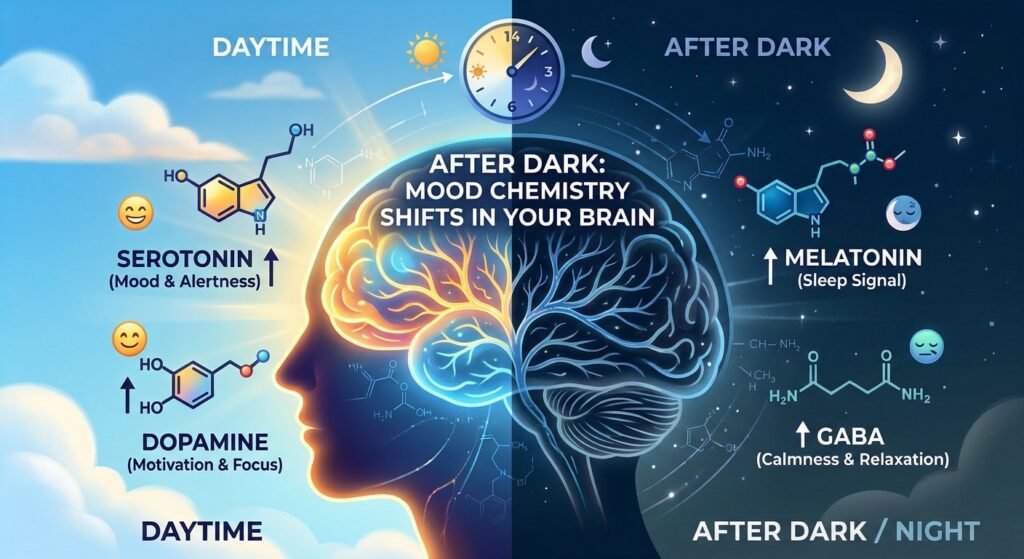
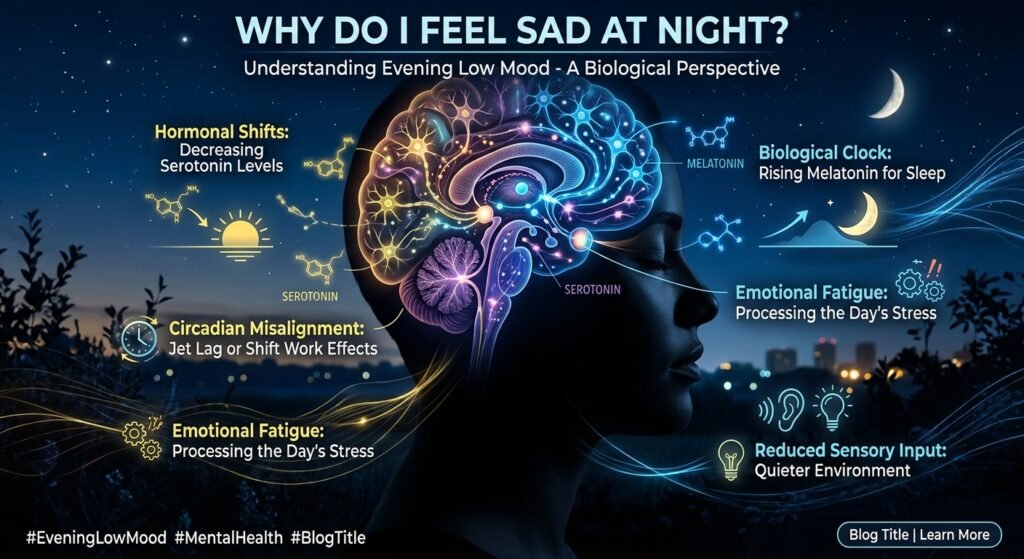
Your body has a roughly 24-hour internal clock that controls more than just when you’re tired. Additionally, it regulates the synthesis and action of important molecules related to mood. If you often wonder, “Why Do I Feel Sad at Night,” understanding these natural body rhythms may help explain the changes in your mood. Serotonin and melatonin have one of the most significant connections. Your brain uses serotonin, the chemical most strongly associated with emotions of well-being, as a raw material to produce melatonin, the hormone that induces sleep.
Serotonin is consumed when night falls and melatonin synthesis increases. According to research, melatonin may also directly inhibit the brain cells that make serotonin, resulting in a feedback loop whereby higher levels of melatonin at night result in lower levels of serotonin activity, which in turn causes your mood buffer to thin up just when you need it most.
Over time, poor sleep exacerbates the condition
The cycle feeds itself if your sleep is being disturbed by depression at night. According to Stanford Medicine, those who suffer from insomnia are 17 times more likely to experience anxiety and 10 times more likely to experience depression than the overall population. Chronic sleep loss, even minor, makes it tougher to control your emotions the next day, which makes it more difficult to sleep the next night.
In subtle ways, the pattern may start to reinforce itself. You begin to dread the night since you think it’s a dreadful time. Anticipatory anxiety makes it difficult to unwind, which postpones sleep, which makes you feel more exhausted the next day, and by the next evening, it has weakened your ability to control your emotions. Rather than treating one and hoping the other goes away, breaking this cycle typically necessitates treating both the mood symptoms and the sleep disturbance at the same time. An estimated 5.2% of adults globally experienced depression in 2023, according to the World Health Organization’s September 2026 fact sheet.
How to Get Rid of Nighttime Sadness
Even while you might not be able to instantly eradicate unpleasant emotions, you can manage them more delicately by making minor adjustments.
Generate Upbeat Thoughts
Positive thoughts can be produced by engaging in an enjoyable hobby, such as writing, playing an instrument, painting or drawing, meditation, or praying. In order to prevent negative thoughts from entering and taking up space, try to keep your head full of happy ideas.
Develop Your Self-Esteem
What skills do you possess? What do you like to do? If you often wonder, “Why Do I Feel Sad at Night,” consider some strategies to boost your self-esteem, such as taking an evening or online course in a subject that interests you, picking up that musical instrument you used to play, attempting a new kind of exercise, or taking up a new pastime. Rumination can be prevented by feeling good about yourself and your accomplishments.
Limit how much light you are exposed to
Reduce blue light from screens in the two hours before bed, and get bright light, ideally sunlight, during the morning and midday hours. These light signals are what your internal clock uses to maintain the proper timing of your hormones. The evening shift is less abrupt when melatonin rises and cortisol decreases on time.
Maintain a regular schedule
Your internal clock won’t drift if you go to bed and wake up at the same time every day, even on the weekends. People who are depressed frequently sleep throughout the day and remain up late, which disrupts the very patterns that regulate mood.
Safeguard Your Social Network
The emotional loneliness that intensifies nocturnal lows can be mitigated by even a brief, sincere interaction with another person, such as a phone call, a shared meal, or a low-key talk. When you are truly introverted and require isolation, this does not entail pressuring yourself to engage in social activities. It entails being deliberate about whether your evenings consist of passive, alone screen time or at least some kind of meaningful human interaction.
Create a Wind-Down Ceremony
The brain reacts to cues that are predictable. Making herbal tea, stretching, reading a real book, or keeping a journal are all examples of regular pre-sleep routines that help the nervous system learn to link these activities with safety and tranquility. Eventually, even before you get into bed, the process itself starts to trigger a relaxation response. Consistency is crucial; the ritual has it.
Try grounding or breathing gently
Return your focus to the here and now when melancholy is accompanied by anxiousness or rushing thoughts. If you often wonder, “Why Do I Feel Sad at Night,” grounding techniques may help you manage overwhelming emotions and racing thoughts. If it seems comfortable, try breathing in for four seconds and out for six. Repeat this process for a minute or two. Additionally, you can list three things you hear, four things you feel, and five things you see. These methods might make you feel more rooted, but they won’t address every underlying issue.
When Is Nighttime Sadness Something to Be Concerned About?
It’s common for people to experience occasional sadness. But keep an eye out if your evening depression persists or starts to negatively impact your quality of life.
Think about getting expert advice if:
- Most days, you feel depressed or hopeless.
- Your sleep schedule drastically shifts.
- You frequently distance yourself from loved ones.
- You get disinterested in things that used to be important to you.
- It becomes challenging to balance your everyday obligations, work, and study.
- Feelings of worthlessness or ongoing concern accompany your sadness.
Seek quick assistance from local emergency services or a trusted person who can accompany you while you seek urgent support if you have suicidal thoughts or feel unsafe. You don’t have to deal with your emotions alone; they are important.
Concluding Remarks: You Don’t Need to Solve Every Problem Tonight
If you frequently ask yourself, “Why do I feel sad at night?” Keep in mind that your sentiments could be a reaction to stress, loneliness, tiredness, unresolved emotions, or a combination of these factors. You don’t have to be critical of yourself for having these feelings. You are not weak or failing because some evenings will feel heavier than others.
If you often wonder, “Why Do I Feel Sad at Night?” remember that these feelings deserve compassion rather than judgment. Consider what your body and mind might require rather than trying to make yourself feel pleased. Take time to relax, interact with others when you need it, and get help from a professional if your sadness persists.