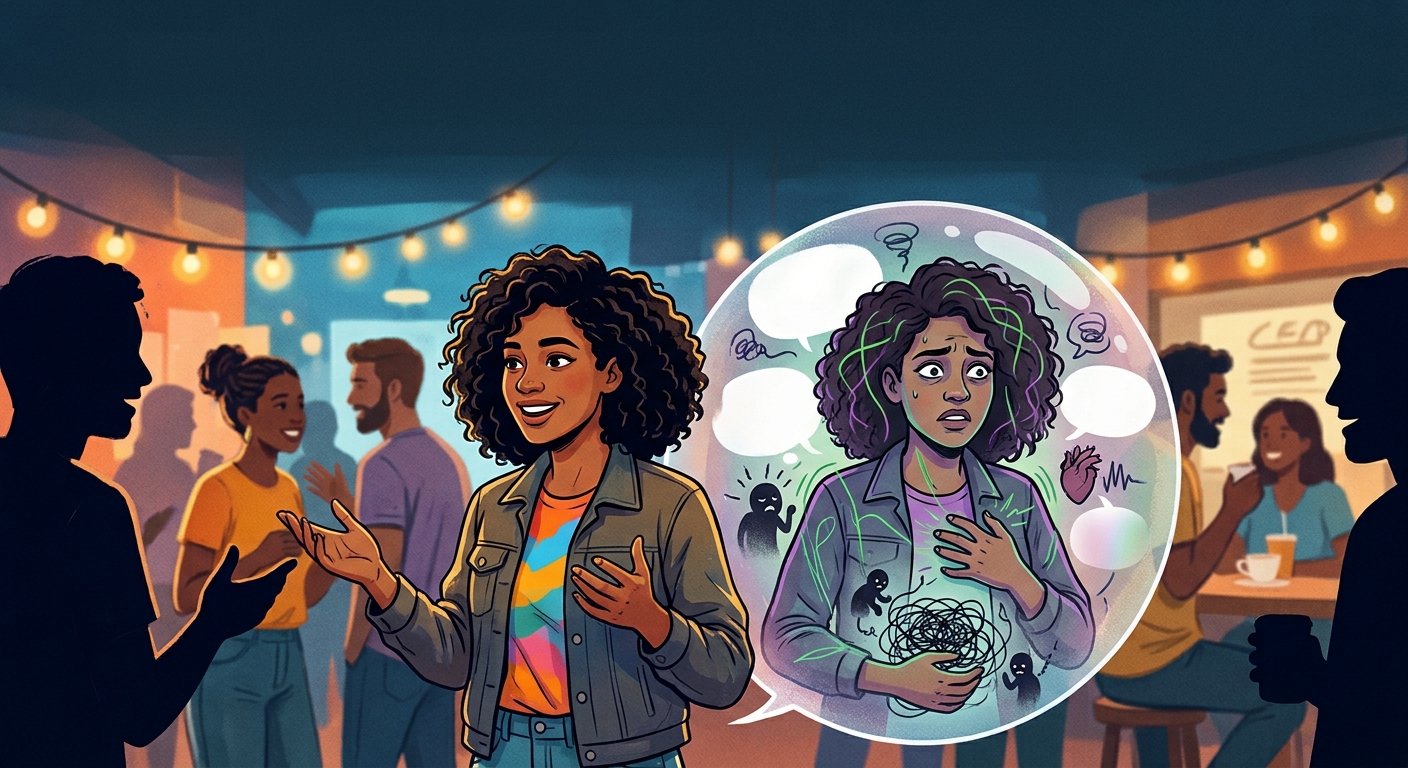
Many people think that those who are outgoing are constantly self-assured, like in social settings, and feel at ease conversing with others. This isn’t always the case, though. Even though they are inwardly afraid and anxious, some people enjoy interacting with others, forming friendships, and engaging in social activities.
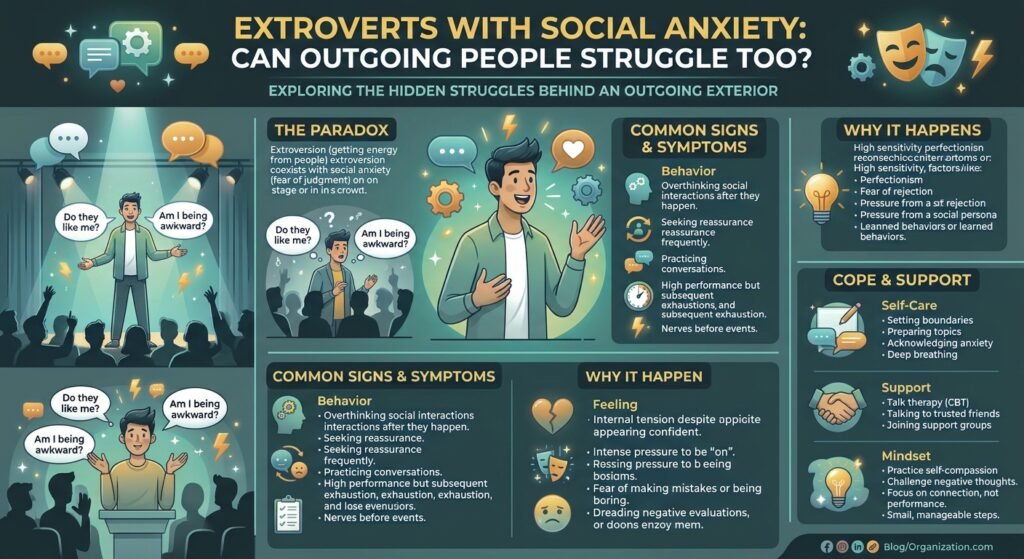
On the exterior, extroverts with social anxiety may seem amiable and self-assured, but on the inside, they may experience anxiety, overwhelm, or fear of being judged. Despite their enjoyment of talks, they may be concerned about giving a bad impression or saying something humiliating.
Shyness is not usually a sign of social anxiety. Knowing how it impacts gregarious individuals can enable us to identify hidden challenges and react with more compassion.
Can Social Anxiety Affect Extroverts?
Of course. It’s a prevalent misperception that social anxiety only affects introverts. Even if they enjoy social situations, extroverts may have intense feelings of fear and self-doubt when interacting with others.
The truth is that social anxiety and extroversion are not mutually exclusive. Even though extroverts like interacting with others, they may not always feel comfortable doing so. In actuality, a lot of extroverts who suffer from social anxiety feel caught between their fear of being judged and their need for connection.
Imagine wanting to go to every party but worrying about saying anything uncomfortable for hours beforehand. or being eager to meet new people yet second-guessing everything you say. For many extroverts who suffer from social anxiety, that is their reality.
Social anxiety symptoms in extroverts
In what ways does social anxiety manifest in extroverts? Although it can differ from person to person, these are some instances of how it could appear:
- Having known each other since high school, you have a strong circle of pals. You are the life of the party whenever you are with them. However, you become less gregarious when you meet new individuals. It’s similar to having an “on-and-off social switch,” which flips in different directions according to the group and environment.
- You’ve been anticipating your sister’s yearly New Year’s Eve celebration. However, you begin to feel uneasy as the celebration day draws near. You’ve been thinking about the embarrassing encounter you had with one of her coworkers last year. Your nervousness increases a few hours prior to your scheduled arrival. You abruptly cancel since you don’t want to embarrass yourself once more.
- Your office’s newest employee seems like such a fascinating individual. You’d love to learn more about them because you’ve heard wonderful things about them. They say “Hello” or “How’s it going?” whenever you walk past them in the corridor, and you converse for a short while. However, you never approach them first since you don’t want to come across as aggressive or obnoxious.
The Struggle of Being Outgoing Yet Socially Anxious
It can be perplexing to be an extroverted person with sporadic social anxiety. You may find it difficult to reconcile seemingly incompatible inclinations or feelings. It may also negatively impact your relationships and mental well-being.
It can be challenging to know how to take care of oneself if you’re an extrovert with social anxiety. Every now and then, you may long for a stimulating night out with buddies. You might need some alone time to recharge on other days. Recall that requiring one of those items is perfectly acceptable. Additionally, it’s acceptable if your social demands occasionally change. You can also read “Why Do I Feel Anxiety Before the Periods?” for your self-guide.
The unexpected intersection between social anxiety and extroversion
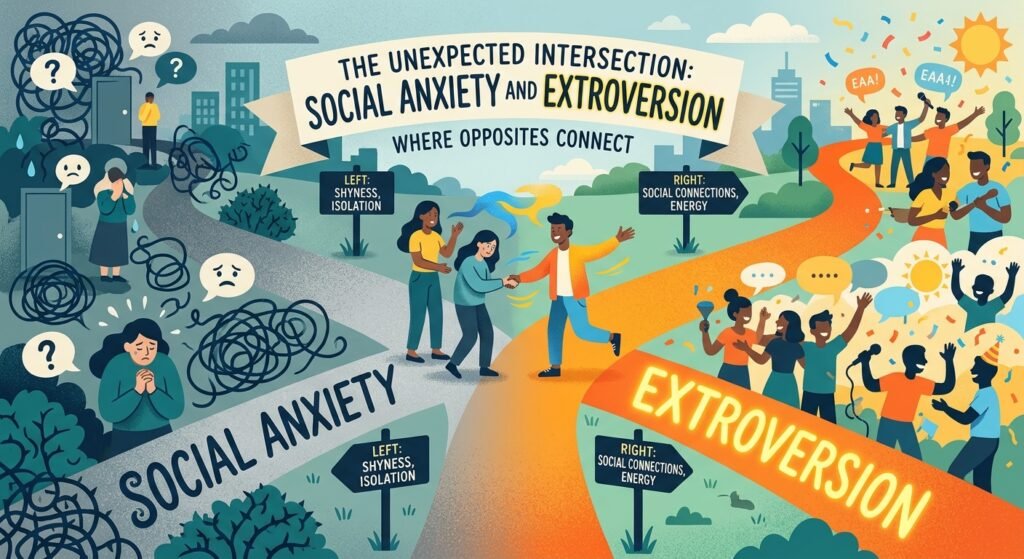
Rarely can human psychology be neatly classified. Although we might think that having social anxiety and enjoying social engagement are mutually exclusive, the truth is far more nuanced. This leads us to a commonly misinterpreted phenomenon: social anxiety in extroverts.
This essay will look at what constitutes an extrovert, how social anxiety might show up differently in extroverts, and how telemedicine therapy can help people of all personality types manage their anxiety symptoms.
An estimated 7.1% of U.S. adults had social anxiety disorder in the past year, higher in females (8.0%) than males (6.1%).
How to Handle Social Anxiety in Extroverted People
Here are some strategies for an extrovert who suffers from social anxiety. You’ll see that people with social anxiety, whether or not they are extroverts, can benefit from many of the same techniques.
Express Your Emotions
Your friends won’t be aware of your anxiety if you don’t communicate it. When you tell people you trust about your social anxiety, they can better understand you and support you through difficult times.
To find a social intensity level that suits the entire group, be willing to compromise. In this manner, you avoid becoming overly overwhelmed by anxiety, and expectations are clear.
Use Your Schedule Wisely
Examine your schedule for the upcoming weeks for a few minutes. Make a note of any situations or conversations that you are aware could cause social anxiety. Prior to or following encounters, make an effort to plan some alone time or self-care. Try to be mindful of any extended periods of time spent alone at the same time. For instance, arrange an exciting event with pals if you don’t have any social activities in the next weeks.
Engage in Social Awareness
Slowing down to observe what is going on in your body, thoughts, and surroundings without passing judgment on what arises is the essence of mindfulness. As a habit, it might help you better understand what makes you feel refreshed and what causes anxiety. Whether it’s spending time alone or interacting with people you know and trust, having this self-awareness will help you recognize when you might need additional support.
Contest Negative Thoughts
When you think the worst about a social interaction, take note of it. Rather than assuming, “Everyone thought I was awkward,” ask yourself, “What evidence do I actually have that people judged me?”
It’s not necessary to swap out every negative idea for a positive one. Reducing needless anxiety can be achieved by learning to think about practical alternatives.
Give Up Striving for Perfection
To be worthy of friendship, you don’t have to be witty, self-assured, or fascinating all the time.
There will inevitably be pauses, miscommunications, and times when people are at a loss for words during conversations.
These are commonplace situations that don’t determine your value. Give yourself permission to engage without attempting to manage every aspect of how other people see you.
Give Yourself Time to Heal
Being socially accessible is not a prerequisite for enjoying people. Take a break, get proper sleep, or engage in a soothing activity after a stressful encounter. You may feel better balanced after taking some time to recover.
But make an effort to discern between getting enough sleep and consistently avoiding social settings out of anxiety.
Speak With an Expert
It’s not always a sign of a mental illness if you’re an extrovert with sporadic social anxiety. However, don’t be afraid to get assistance if your social anxiety is interfering with your relationships or day-to-day activities. An official diagnosis can be obtained through an evaluation by a psychiatrist or therapist. Anxiety disorders are treatable and manageable with the correct care, even if they can be difficult to live with.
Final Thoughts
While secretly battling their dread of being judged and rejected, extroverts with social anxiety may relish friendships, discussions, and social events. Their gregarious demeanor does not lessen the severity of their anxiousness.
Even after laughing with others, a person may still have self-doubt. Even if they enjoy meeting new people, they may nevertheless be anxious before making an introduction. One person may have both experiences.
If this seems similar, keep in mind that you can feel more at ease in social situations without changing who you are. It is possible to have healthy relationships without continuously worrying about what other people think if you practice self-compassion, practical solutions, and professional support when necessary.