
Dogs in particular provide their human counterparts with essential emotional assistance. Their unwavering love and company can have a big impact on our well-being and mood. Pets and Depression are closely connected, as spending time with dogs may help improve emotional well-being. Oxytocin, sometimes referred to as the “love hormone,” is released during interactions with dogs and is linked to stress relief and bonding. Our mental state can be significantly impacted by this neurochemical reaction, which fosters serenity, satisfaction, and security. When under stress or experiencing emotional upheaval, having a pet may be incredibly reassuring.
Our furry friends are there to lend a sympathetic ear, a consoling paw, or a soothing nuzzle, whether we’re going through a stressful day at work, managing relationship issues, or navigating times of sadness or grief. Their steadfast devotion and accepting demeanor provide a secure environment where we may openly express our feelings without worrying about criticism or rejection.
Additionally, taking care of a pet can instill a sense of purpose and responsibility, giving us a meaningful connection and a reason to prioritize our well-being. The companionship of a pet can be especially helpful for people dealing with mental health conditions like depression or anxiety, providing a source of comfort and motivation to engage in self-care activities.
The Advantages of Pet Ownership for Mental Health
Beyond the therapeutic function of ESAs, owning a pet generally has many positive effects on mental health. A few ways that pets might enhance mental health are as follows:
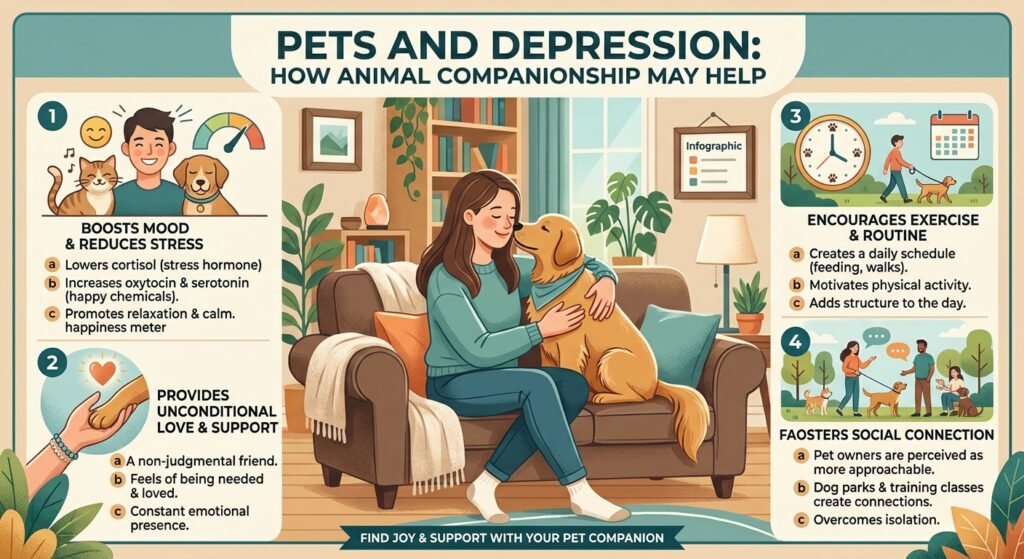
1. Lowering Anxiety and Stress
Engaging with pets helps reduce stress levels, according to numerous studies. Endorphins are released when you pet a dog or cat, and the repetitive motion of caressing an animal can have a relaxing impact on the neurological system and control anger issues also.
Petting a dog or cat can lower cortisol levels, which helps lower stress and anxiety, according to a 2001 study published in the Journal of Personality and Social Psychology. Spending time with a pet can provide a calming diversion and a means of relaxation for people who are having trouble with overpowering thoughts.
2. Better Mood and Depression Treatment
Pets are a great way to improve your mood. They provide purpose and camaraderie, which is particularly beneficial for those experiencing pets and depression. Owning a pet was associated with reductions in depressive symptoms, especially for single people, according to a 2017 study published in BMC Psychiatry. Taking care of a pet can also help people develop a feeling of routine and responsibility, both of which are frequently essential for controlling depression.
3. Give Love Without Conditions
Unconditional love is a sort that offers everything, doesn’t judge, and has no expectations; it is one of the most therapeutic parts of pet friendship. When words or other people are unable to reach us, this kind of unwavering, uncomplicated love frequently does. When you’re feeling low on energy, pets don’t inquire why you’re crying or retreat.
They merely remain beside you, breathing next to you and letting you know that you are not invisible. This presence can literally save the lives of many people who suffer from depression. A dog’s wagging tail or a cat curled up on your lap subtly reminds you that you are deserving of affection when you feel unworthy.
4. Encourage People to Move

Even simple activities can seem difficult when someone is depressed, and maintaining personal hygiene can become especially challenging. However, walks, meals, and playtime are all necessary for pets, particularly dogs. These treks were modest but effective gestures of defiance against the paralysis caused by despair. Walking her dogs provided her a rhythm and a sense of movement throughout the day, even if she didn’t feel like moving.
This effect is supported by research. Walking boosts exposure to natural light and releases endorphins, both of which have been shown to improve mood. Pets become inbuilt motivators and personal trainers in this way. That gentle prodding to go outside can be the first step toward feeling human again for anyone in recovery from depression.
5. Reducing Loneliness and Offering Social Support
Poor mental health is largely caused by loneliness, particularly in older persons and socially isolated people. Because they offer continual companionship, pets help bridge this emotional distance. According to a 2017 study published in the Journal of Social and Personal Relationships, having a pet can help people feel less alone by offering emotional support and reducing symptoms of loneliness.
Many people find that their dogs play a significant role in their social support system, enabling them to deal with challenging situations more resiliently. Pets and Depression are connected through the emotional support and companionship animals can provide, which may help reduce feelings of loneliness.
6. Promoting Exercise
Maintaining good mental health requires exercise, and pets, especially dogs, can be great motivators. Playtime, daily walks, and other activities keep pet owners busy, which improves mood and lowers anxiety. Due to the necessity of walking their dogs, dog owners were more likely to adhere to physical activity requirements, according to a 2013 study published in Preventive Medicine. Frequent exercise has been shown to reduce stress, anxiety, and depressive symptoms.
The Science of Pets’ Healing Potential
The positive impacts of pets on mental health are supported by research. According to research, engaging with animals stimulates the brain’s reward regions, which release the feel-good neurotransmitters serotonin and dopamine. Furthermore, having a pet has been associated with better heart health and lower blood pressure, highlighting the physical advantages of emotional attachment. Pets and Depression are an important area of interest in mental health research, as animal companionship may support emotional well-being and help ease feelings of sadness and loneliness.
Having a pet can even result in quantifiable improvements in certain mental health conditions:
PTSD: When paired with service dogs, veterans and trauma survivors frequently report reduced anxiety and flashbacks.
Autism Spectrum Disorder: Children with autism benefit from therapy animals, especially dogs, which help them become more socially adept and have fewer meltdowns.
Dementia: Therapy pets can help people with Alzheimer’s or other types of dementia become more engaged and less agitated.
The Reasons Pets Are More Than Just Animals

Humans and their pets have a symbiotic relationship. They give us emotional stability, company, and happiness in exchange for the food, shelter, and love we give them. These moments serve as a reminder of the small pleasures in life, whether it’s a fish swimming calmly in its tank, a dog wagging its tail after a long day, or a cat curled up on your lap.
When exploring pets and depression, these simple moments of companionship highlight how pets may support emotional well-being and bring comfort during difficult times. Although having a pet requires dedication, the advantages they provide for mental health are unmatched.
They serve as a reminder to be present, love without conditions, and find joy in the little things in life. Pets serve as a gentle reminder that sometimes healing arrives on four legs, with a bouncing tail or a purring heart, in a world that is frequently full of stress and uncertainty.
A 2025 systematic review and meta-analysis included 21 studies involving 159,322 participants. Overall, pet ownership was not significantly associated with depression risk. Dog ownership also showed no statistically significant association. This is useful for presenting a balanced view of the evidence.
Considerations Prior to Purchasing a Pet
Pets can provide happiness and company, but taking care of them also entails obligations. Think about if you can provide for an animal’s requirements before adopting it.
Time and effort: Pets require frequent feeding, cleaning, care, and occasionally exercise.
Costs: Emergency treatment, grooming, veterinarian care, food, and immunizations may all be costly.
Living arrangements: Verify if your house is safe for pets and permits them.
Long-term commitment: Despite changes in your attitude, schedule, or situation, many animals require care for years.
Support available: Think about who might be able to assist with the animal’s care at times of illness or hardship.
It can be wiser to spend time with someone else’s pet before choosing to acquire one if sadness is making daily tasks difficult.
When to Get Expert Assistance
Consider consulting a licensed mental health professional or healthcare provider if depressive, hopeless, tired, or disinterested sensations last for more than two weeks. If your symptoms are severe or seriously interfere with your day-to-day activities, get help sooner.
If you already own a pet, you can keep enjoying its company while getting the right care. When considering pets and depression, remember that you don’t need to rely on an animal to help you feel better, nor do you have to deal with depression on your own. Get help right away from a trusted person, a mental health professional, or your local emergency services if you have suicidal or self-harming thoughts.
A systematic review and meta-analysis of human social interactions comprised 51 studies with 3,741 individuals in the meta-analysis and 63 studies in the qualitative review. It discovered that in causal studies, oxytocin reactions to social interaction were inconsistent. This serves as a helpful reminder that caressing a dog does not necessarily result in a rise in oxytocin.
Conclusion: The Comfort of Having an Animal Friend
For those who are depressed, pets can provide solace, company, and a sense of direction. The relationship between people and animals can be a significant source of emotional support, from promoting daily routines to reducing loneliness. But each person’s experience is unique, and having a pet won’t make depression go away.
A brief interaction with an animal can occasionally alleviate loneliness during a trying day. Animal friendship can be a beneficial aspect of a person’s path to improved well-being if reasonable expectations and suitable mental health care are provided.