

If you frequently question yourself, “Why do I get angry so easily?” the answer is typically not that you have a short fuse. Anger is often a signal. It may manifest as feelings of tension, overwhelm, disrespect, intimidation, helplessness, weariness, or emotional harm.
The crucial point is that rage is frequently not the initial feeling. It is frequently the one that shows up first. Fear, despair, worry, frustration, grief, embarrassment, or emotional weariness could lurk beneath it. That’s one of the reasons it confuses folks. They believe that their anger is “for no reason,” but in actuality, their body and mind have been carrying too much for too long.
Is It Common to Become Angry Quickly?
Indeed. Everyone becomes enraged. Anger can even be helpful since it lets you know when something is hazardous, unfair, or goes too far. The question is not whether anger is a problem. The question is if it begins to dictate your responses, relationships, choices, or well-being.
It may be common if it occurs occasionally during stressful times due to some mental health issues like depression, stress, or anxiety. However, it is worthwhile to gain a deeper understanding if it occurs frequently, feels severe, or results in regret, conflict, or harm.
There Are Two Competing Systems in Your Brain
The amygdala, a little almond-shaped structure located deep within your brain, fires nearly instantaneously when anything irritates or threatens you. It’s your emotional warning. Simultaneously, the frontal area of your brain, located directly behind your brow, is meant to activate and function as a brake, assisting you in determining whether the circumstances truly call for that degree of response.
When someone becomes upset quickly, their braking mechanism either doesn’t fully engage or activates too slowly.
The orbital frontal cortex, often known as the brake, should engage concurrently with the amygdala during angry episodes in order to maintain a proportionate response, according to research from Harvard Medical School. The brake completely fails in depressed individuals who are prone to angry outbursts. Without any balancing, the amygdala intensifies, and the outburst occurs prior to any logical assessment.
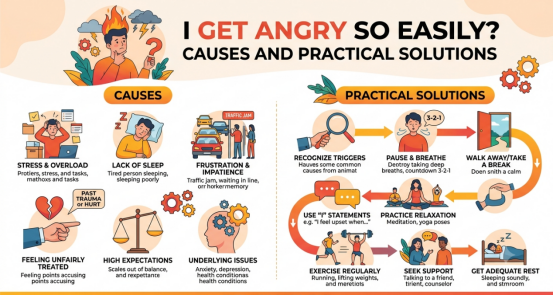
10 Common Reasons You Get Angry
The True Causes of Why I Get Angry So Easily
Seldom does anger begin where it appears to. People frequently seek solace from an uncontrollable reaction when they wonder, “Why do I get angry so easily?” However, as was previously mentioned, rage is more than just a feeling; it’s an indication that something needs to be addressed.
To put it simply, it manifests when we feel ignored, intimidated, or powerless. Unspoken stress, familial conflict, and emotional repression are the main causes of rage for many Pakistanis and people throughout the world. The first step to emotional control and long-lasting peace is to comprehend these underlying layers.
The Significance of Unfulfilled Emotional Needs
Irritation develops into a habit when emotional needs are neglected. Many people learn to repress pain or sadness rather than express it as they grow up, particularly in family structures. Those suppressed emotions eventually manifest as sudden outbursts of rage. Even inadvertent emotional neglect is one of the biggest causes of everyday annoyance. Understanding this pattern facilitates the development of counseling and anger management techniques that go beyond outward manifestations.
Burnout and Stress: The Quiet Fuel
A persistent feeling of overload is brought on by long work hours, financial strain, or insufficient sleep. This stress reaction is exacerbated in Pakistan by growing inflation and erratic routines. People’s brains go into survival mode when they are under chronic stress, and even minor triggers can cause outbursts. Long-term mental health depends on managing this stress, overcoming depression, and getting off from social anxiety through treatment, healthy routines, and emotional support systems.
Feeling Helpless or Unfairly Treated

When you feel mistreated, ignored, stuck, or powerless to alter an unpleasant circumstance, anger frequently flares up. It frequently occurs in relationships, at work, in traffic, and in circumstances when you feel your demands are not being met.
Sometimes the minor incident itself isn’t the main source of the anger. It has to do with what that incident means to you.
Fatigue and Loss of Sleep
It is more difficult to control emotions when you don’t get enough sleep. Tiredness makes little things seem bigger, reduces your patience, and depletes your brain’s ability to effectively handle frustration.
If you have trouble sleeping and are more quickly agitated than we are, it is due to trauma or painful past experiences. Bullying, abuse, emotional neglect, or repeated invalidation are examples of past experiences that might make current circumstances seem more intense or dangerous than they actually are. Even if they don’t fully understand why, this can cause some people to become triggered more quickly than others.
Changes in Hormones and Health
Emotional sensitivity and irritation can be impacted by hormonal changes. Some people observe that they become furious more readily at specific phases of their cycle, during significant hormonal fluctuations, or when they feel unwell.
Changes in medicine and certain medical conditions can also affect mood.
What Makes You Feel Sudden Anger?
Seldom do feelings emerge out of thin air. They are acquired and molded by both experience and biology. Therefore, a lot of people who are “always on edge” are emotionally stressed rather than inherently angry. Chronic stress and poor emotional regulation have been shown to rewire the brain’s response system, making people more sensitive to little annoyances, according to research on the subject. According to Gallup, 49% of people in Lebanon reported experiencing anger on the day before they were surveyed, making it the highest recorded rate of daily anger worldwide.
Typical Sources of Rage Include
Feeling ignored or unheard A build-up of stress or exhaustion Unresolved grief or past trauma Fear of losing control or being treated disrespectfully
Anger functions as a loud, urgent, and frequently misinterpreted internal alert when these stressors come together.
How Can You Control Your Rage at Home?

You can manage your anger at home in a number of beneficial ways.
Methods of Relaxation
These include taking deep breaths and visualizing calming situations. Breathe deeply into your lungs while attempting to relax, taking slow, deliberate breaths in and out. Repeat a soothing phrase or word, like “take it easy” or “relax.”
You could also choose to use your imagination or recollections to picture a calming moment. Exercises that are slow and yoga-like may also help you feel calmer and relax your body.
Restructuring Cognition
You may alter how you express your anger by altering the way you think. People frequently find it easy to think dramatically when they are upset. It’s crucial to concentrate on communicating logical ideas rather than illogical ones.
Steer clear of the terms “always” and “never” in your speech and thoughts. These words are untrue and might exacerbate your anger by giving you the impression that it is warranted. Those who might be attempting to assist you in finding a solution to your issue may also be harmed by these remarks.
Keeping a Journal
Writing can be a useful way to communicate your feelings. It’s not only a healthy way to express your emotions, but you might also identify particular causes or triggers that make you angry. Research indicates that expressive writing enhances mental well-being as well. You might write in your journal about the things that went well that day. You can write about the times you’ve been grateful throughout the past week.
Journaling might help you let go of stressful activities you feel like you “should” be doing. Anything that is excessively stressful in your daily life might be recorded in a notebook. When you feel angry, try writing down your sentiments, what caused them, and how they showed up. Journaling can make you feel more at ease in the present and give you a useful record of your former feelings.
Solving Problems
Anger can be brought on by very legitimate issues. Anger is OK when things don’t go as planned, but it won’t solve the issue. Finding a strategy to deal with the issue rather than concentrating on the solution is the greatest way to deal with a situation that is upsetting you.
Making a strategy and following it frequently will allow you to monitor your progress. If the solution isn’t precisely what you had in mind, don’t be upset. Just try your hardest.
Interaction
People sometimes draw erroneous assumptions when they are upset. Before you lash out during an intense dispute, take your time and consider your answers. Don’t forget to pay attention to what the other person is saying. You can find solutions to issues through effective communication before your rage gets out of control.
How Can a Doctor Assist You in Controlling Your Anger?
Interventions to manage your anger can be suggested by a medical expert, such as a psychologist or psychiatrist. Both anger management training and talk therapy might be beneficial. Online or in-person sessions are available for managing anger. A book can also be used to study them. You can learn how to recognize and address your frustrations by practicing anger management.
This could entail communicating your needs to others or to yourself while remaining composed and in control of the circumstance (as opposed to having an angry outburst).
You can attend these sessions with a counselor by yourself, with your spouse, or in a group. The program and your specific needs will determine the kind, duration, and quantity of sessions. The duration of this kind of counseling might range from a few weeks to many months.
Your counselor will help you recognize your anger triggers and read your body and emotions for indicators of anger at the start of the sessions. One early step in managing your anger is to recognize and monitor these warning indicators.
You’ll eventually pick up thought patterns and behavioral techniques that will help you manage your rage. Your counselor will also assist you in managing any underlying mental health issues, which frequently makes it simpler for you to regulate your anger.
Conclusion
Being easily enraged does not indicate that you are flawed; rather, it frequently indicates that underlying emotional, physical, or environmental issues require addressing. Frequent anger can be caused by a number of factors, including stress, unresolved prior experiences, anxiety, insufficient sleep, unreasonable expectations, and inefficient coping mechanisms. Fortunately, rage is a controllable emotion.
You can react to challenging circumstances with more patience and self-control by recognizing your own triggers, putting good coping mechanisms into practice, enhancing communication, and employing cognitive skills to confront harmful thinking. Every little improvement increases your emotional resilience, but long-lasting change requires persistent effort. Seeking assistance from a mental health expert can help you create individualized methods for long-lasting emotional well-being if your relationships, career, or general quality of life are being negatively impacted by constant anger.
Frequently Asked Questions
1. Why am I so prone to anger?
Stress, frustration, emotional triggers, sleep deprivation, or unresolved difficulties can all lead to frequent rage.
2. Is it typical to experience anger frequently?
While occasional anger is normal, frequent or severe anger can negatively impact your relationships and mental health.
3. How can I swiftly manage my rage?
Anger can be temporarily reduced by deep breathing, pausing, and recognizing causes.
4. Does stress exacerbate anger?
Indeed. Excessive stress can impair emotional regulation and make controlling rage more challenging.
5. When should I get treatment for my anger management issues?
If your anger feels out of control, hurts you, or interferes with your day-to-day activities, think about getting professional help.