

In some situations, stress can be a normal and even helpful response. According to evolutionary research, our ancestors evolved the stress response as a means of surviving under dangerous circumstances. This reaction can inspire us, give us energy, and assist us in defending ourselves against possible threats. However, excessive or persistent stress in daily life can have a profoundly detrimental impact on wellness, making effective stress management an important part of maintaining both mental and physical well-being. Studies reveal that extended stress can:
- Cause the body to have inflammatory reactions.
- Impair the immune system’s ability to operate.
- Increase blood pressure and heart rate.
- Risk factors for major cardiovascular events have increased.
- Cause substance abuse and other harmful coping strategies.
- Cause or worsen ailments, including anxiety and despair.
Take a free stress management test from reliable, scientifically supported sources if you’re not sure if your stress levels are problematic. These techniques can assist in determining whether you’re exhibiting warning indications of detrimental stress levels, such as irritation, feeling overburdened, sleep disruptions, and physical symptoms like tense muscles. Identifying these signs may indicate that it’s time to seek expert advice or put better stress-reduction techniques into practice.
20 Effective Stress Management Techniques
1. Role of Walking in Stress Managment
Exercise is a quick and efficient way to reduce stress. Along with the physical advantages of exercise, going for a stroll provides a change of scenery that might help you adjust your perspective. Walking is an easy yet powerful technique to revitalize your body and mind, whether you’re taking a long stroll in the park or taking a fast walk around the office to take a break from a task.
Walking and relaxing together may be a particularly useful strategy for lowering stress, according to one study.
2. Role of Touching in Stress Management
Stress can be considerably reduced by physical contact. Giving a loved one a hug is particularly helpful. Hugging causes the release of oxytocin, sometimes referred to as the “cuddle hormone,” which is associated with lower levels of stress and more happiness. Additionally, oxytocin lowers blood pressure. It can induce calm and lower the stress hormone norepinephrine.
Therefore, if you need an embrace, don’t be scared to ask for one from a loved one. It might be one of the easiest ways to relieve tension and is beneficial to both of you.
3. Try to Get Rid of the Stressors
The severity of the circumstance and the individual experiencing it determine whether or not you endure an unbearable degree of psychological stress. Your reaction to a stressor can also be significantly influenced by how you view and consider it. While it’s not always possible to avoid an issue or get out of a stressful situation, you can strive to lessen your level of stress. Consider whether you can alter the stressful situation by asking for assistance, letting up on certain responsibilities, or lowering your standards.
4. Develop Social Support

Resilience to stress can be enhanced by strong social support. Make a calculated effort to reach out. Some family members or friends could have good listening and empathy skills. Others might be excellent at providing practical assistance, such as cooking a meal at home or taking care of a youngster for an hour. Supporting others can also make people feel happier and less depressed. Just be careful to maintain equilibrium in your interactions. Your stress level may rise if you have a friend who needs help but never provides it. For people who experience stress in social situations, learning how to manage social anxiety can also help reduce everyday stress and build confidence.
5. Connect with Family and Friends
During difficult times, making connections with friends, family, coworkers, or support groups can be incredibly helpful. Not only does sharing your emotions and experiences lessen the load, but it also creates opportunity for guidance, support, and useful help. Lack of connectivity also leads you to social anxiety. Strong social ties can protect against the negative effects of stress and promote better mental health. If you’re having trouble reaching out, think about participating in professional support programs or community events that promote social interaction in a secure setting.
6. Restructuring Cognition
The process of recognizing and disputing negative or skewed ideas, then substituting them with more realistic and balanced ones, is known as cognitive restructuring. The idea “I can never handle this,” for instance, may be rephrased as “This is hard, but I’ve navigated difficult situations before.” Cognitive restructuring was found to be beneficial in reducing psychosomatic symptoms in a review published in BioPsychoSocial Medicine, and a large body of CBT research supports its benefits for depression, anxiety, and stress. Accuracy is the aim, not toxic positivism. When we stop catastrophizing and think things through clearly, most difficult circumstances appear more doable.
7. Growing in Emotional Intelligence
The ability to identify, comprehend, and control one’s own emotions as well as those of others is known as emotional intelligence (EI). Higher EI is directly associated with reduced stress, more positive emotional states, and improved general health outcomes, according to research published in a peer-reviewed PMC study. Problem-focused coping mechanisms, which actively confront stressors rather than avoiding them, are more common among emotionally competent people.
8. Make Use of Laughing
Laughter as “internal jogging,” which may be a source of healing. It becomes an expression of happiness, hope, and optimism and lowers stress hormones. Persistent stress can also affect your mood and emotional well-being, so understanding the signs of depression can help you recognize when additional support may be needed.
9. Cut Down on Loud Noises in Your Surroundings
The stress reaction is triggered by loud noise. It detracts from mindfulness and makes it difficult to think. Try using earplugs or noise-canceling headphones if you can’t escape loud noise, which could be caused by traffic, neighbors, or someone in your house or place of business.
10. Breathing Techniques

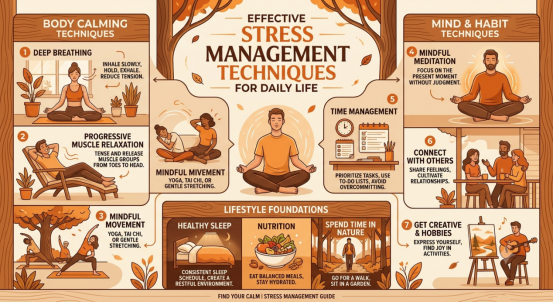
Your total stress level can be significantly reduced by concentrating on or altering your breathing. In a matter of minutes, breathing exercises can help you relax both physically and mentally. The best part is that nobody will be aware that you’re doing them. Breathing exercises may therefore be essential for lowering your stress levels, whether you’re at a packed theater or a stressful conference.
Watch your belly fill with air as you inhale through your nose.
Take a breath and gently count to three. After holding for a moment, count to three once again while gently exhaling through your nose. Imagine that you are breathing in serene, tranquil air as you inhale through your nose, your body being filled with that air, and you are releasing tension and stress as you exhale.
11. Aromatherapy in Stress Managment
Aromatherapy can help you feel more energized, at ease, or in the present moment, all of which are significant advantages for reducing stress. According to recent research, some smells may change brain wave activity and lower the body’s levels of stress chemicals. So whether you like body products, candles, or diffusers, think about adding some aromatherapy to your daily routine.
12. Produce Art
It may have been simple for you to connect with your creative side as a youngster, but if you’ve lost touch with your love of art, it’s not too late to do so. If you’re not interested in painting or drawing, think about coloring in a coloring book. The popularity of adult coloring books has increased, and for good reason: coloring is a fantastic way to decompress. Coloring can have a relaxing impact, according to numerous studies. According to one study, coloring in conjunction with medicine and physical therapy helped lessen negative emotions like anxiety and despair.
13. Meditate
Numerous studies have demonstrated that mindful meditation helps lower psychological stress and anxiety; even short-term mindfulness meditation programs have been shown to be effective. To begin, take five minutes to sit and breathe in a peaceful area. Keep your attention on the here and now; if your thoughts stray, notice them before letting them go. Don’t be critical of yourself if your thoughts falter. Bring the focus back to the here and now by gently refocusing.
14. Safeguard Your Sleep
Stress throughout the day has an impact on your sleep at night. Even worse, sleep deprivation can have an impact on mood and cognitive function. How can I get a better night’s sleep? Make an effort to maintain a regular sleep schedule that gives you time to relax before turning off the lights. Insomnia may be alleviated by meditation and relaxation.
Additionally, stay away from alcohol and caffeine in the late afternoon and evening. Put down your screens because blue light can inhibit the hormone melatonin, which promotes sleep (and using social media could make you feel more emotional). Lastly, walk around during the day. A substantial amount of evidence indicates that physical movement might enhance sleep, particularly for middle-aged and older persons.
15. Adopt Proactive Planning
Being unprepared or behind schedule sometimes leads to stressful circumstances. Even while it is impossible to predict every situation, taking a more deliberate and proactive approach might greatly lessen stress in the future. Think about assessing how you now plan and manage your time. Digital calendars, virtual task lists, personalized planners, and productivity apps can all be used to keep track of obligations and avoid the stress of forgetting or missing deadlines.
Preventative measures can be guided by thinking back to instances in the past where being unprepared caused distress. For example, if a car problem in the past caused you a lot of worry because you didn’t have the resources you needed, taking action now to be ready for similar circumstances could stop that stress from happening again.
16. Recreational Pursuits
Whether it’s reading, cooking, gardening, sports, or music, doing things you enjoy is not a luxury but rather a psychological need. According to research published in PMC, engaging in leisure activities instantly enhances subjective well-being by generating good emotions, which in turn fosters long-term resilience and more efficient stress-reduction techniques.
According to the same study, engaging in leisure activities increases resilience, the internal resource that enables people to recover from stressful situations, and over time, it predicts higher levels of life satisfaction. The process is consistent with Fredrickson’s “broaden-and-build” theory, which maintains that happy feelings broaden our perspectives and create psychological reserves for stressful situations in the future.
17. Combining Everything
Stress is multifaceted and manifests itself simultaneously in the body, mind, emotions, and behavior; no single tactic is effective for everyone. An approach to stress management that incorporates elements from all four domains is the most robust. Start where you have the greatest control: if you’re physically tight, start with exercise or PMR. Cognitive reorganization is the first step if you tend to think catastrophically. Practicing emotional intelligence or visualization can be beneficial if you are experiencing emotional overload. Additionally, re-engaging with leisure and people might drastically change your baseline stress level if you’ve been withdrawing socially or giving up hobbies.
18. Refrain From Thinking Negatively
Optimistic emotions are enhanced by optimistic thinking. “Find three positive things for one negative or stressful thought.” “Count your blessings, such as a safe place to live, a nice meal, and heat for your home during cold weather,” she adds. Among adults in the United States, common sources of stress include work, financial concerns, and health-related issues.
19. Make Use of Constructive Self-Talk
The stress reaction is naturally triggered when you are critical of yourself. Giving yourself encouragement and praise can help you feel less stressed. You’re powerful and intelligent, and you’ve accomplished more. You’re trying your hardest, even if things don’t go your way.”
20. Find Out If It’s Worth While
Asking yourself whether the reason for your stress will matter in a year or whether the health issues that stress can cause are worth it will help you put things in perspective. “It buffers stress as soon as you realize that something may not be as important as you thought.”
21. Seek Expert Assistance When Required
Some stressful situations may feel overpowering or persistent beyond your ability to handle on your own, despite your best efforts. Speaking with a licensed mental health expert is a crucial and proactive measure in these situations. Counselors and therapists can offer customized approaches, therapeutic procedures including cognitive behavioral therapy, and, if required, recommendations for suitable medical care. Early intervention promotes long-term mental health and frequently stops suffering from getting worse.
Conclusion
In conclusion, successful stress management necessitates a multimodal strategy that includes awareness, emotional control, realistic evaluation, proactive planning, regular self-care, social support, and professional advice when necessary. Although stress is an inevitable part of life, it is possible to lessen its detrimental effects and increase resilience by using deliberate methods. Adopting these strategies enables people to confidently overcome obstacles and preserve holistic well-being in a challenging society.
Frequently Asked Questions
1. How can stress be effectively managed?
Stress-reduction techniques include deep breathing, exercise, mindfulness, restful sleep, and time management.
2. How can I swiftly lessen my stress?
Try practicing relaxation techniques, taking a quick stroll, listening to soothing music, or deep breathing.
3. Can altering one’s lifestyle reduce stress?
Indeed. Stress management can be enhanced by eating a balanced diet, exercising frequently, and getting enough sleep.
4. What makes stress management crucial?
Stress management enhances focus, mental and physical health, and general quality of life.
5. When should I get stress relief?
If stress overwhelms you, persists for a long period, or interferes with your everyday activities, get expert help.